
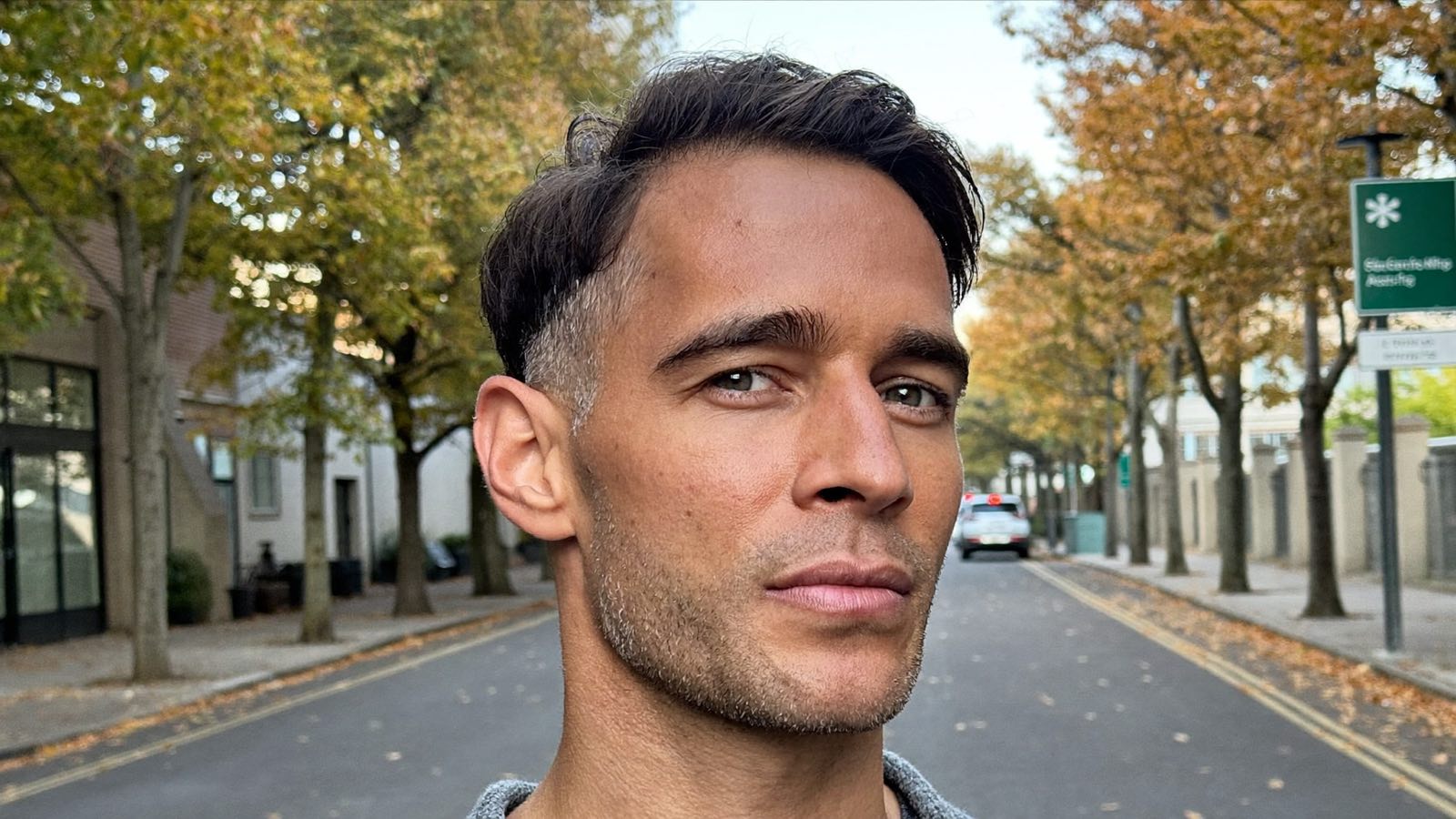
Hairline design for your face shape starts with proportion rather than preference. A well-designed hairline sits where the upper third of the face naturally begins, follows the curve of the forehead, keeps soft recession at the temples and is placed at a height that will still look right as you age. Face shape then fine-tunes the outline: a round face, a square jaw or a long forehead each call for slightly different choices. Design is always individual, and the final line is decided in person rather than read off a chart.
Most people know what they dislike about their hairline long before they know what a good one looks like. This guide to hairline design for face shape explains how surgeons think about the front edge of the hair: the measurements used, how different face shapes are approached, why the corners at the temples matter more than the centre, and what actually happens at a design appointment.
How a Hairline Is Designed Around Your Face
A hairline is designed by placing it where your facial proportions say it belongs, then adjusting its height, shape and corners for your face shape, forehead and age. The aim is a line that looks as though it has always been there. A surgeon weighs balance, symmetry and future hair loss together, so the result frames your face today and in twenty years.
In practical terms, a design is built from a handful of decisions. Where does the centre of the front edge sit? How wide does the line run before it turns at the temples? How deep are those corners, and how far back do they recede? How soft should the transition be from the first fine hairs to fuller density behind them? Each answer depends on your features, your hair and what you are likely to lose later.
At Nova Medical Toronto, every design follows the planning steps set out in the Nova Medical FUE Protocol, from measurement and marking to how grafts are later sorted and placed along the approved line.
The Facial Thirds Rule and Where the Hairline Sits
The facial thirds rule divides the face into three roughly equal vertical sections: hairline to brows, brows to the base of the nose, and nose to chin. In a balanced face these sections are close in height, so the lower edge of the top third gives a natural starting point for the front of the hairline.
The rule is a guide, not a ruler. Many faces are not evenly divided, and a hairline that matches the thirds exactly can still look wrong if the forehead slopes steeply or the brows sit unusually high. That is why the measurement is treated as a first sketch. The line is then viewed from the front, both sides and above, and adjusted until it looks balanced from every angle people will actually see.
The centre point of the hairline, sometimes called the anterior point, matters too. It usually sits roughly above the middle of the forehead, and many natural hairlines show a slightly denser forward tuft of hair there. Recreating that subtle focal point helps the front look organic rather than drawn.
Oval, Round, Square, Oblong and Heart-Shaped Faces
Face shape changes which outline looks most natural, mostly through how wide the line runs, how much it curves and how defined the temple corners are. The table below summarises common considerations. It is general guidance only: most faces mix features from more than one shape, and your own design is decided in person.
| Face shape | Common features | Design considerations |
| Oval | Length slightly greater than width, softly curved jaw | Very adaptable; a moderate height with gentle temple recession usually suits it |
| Round | Width and length similar, full cheeks, soft jaw | A slightly higher centre and clearer temple corners can add length and structure |
| Square | Broad forehead, angular jaw | A straighter front with defined but softened corners echoes the jaw without looking harsh |
| Oblong | Long face, often a tall forehead | A line placed a little lower, within the upper third, can shorten the face visually |
| Heart-shaped | Wider forehead, narrower chin | A softly curved outline with gentle temples helps narrow the upper face |
Hair character interacts with all of this. Coarse or curly hair reads as fuller at the front, so the edge can be a touch softer, while fine, straight hair often needs more deliberate irregularity so it does not form a visible band. Colour contrast between hair and skin also changes how much detail the eye picks up along the edge.
Forehead Height and How It Changes Placement
Forehead height affects placement because the same hairline can look low on one forehead and high on another. A tall, flat forehead can usually accept a slightly lower line, while a forehead that slopes back sharply often needs the line set a little higher, or it will look too low from the side even if it looks right from the front.
Profile view is where many designs succeed or fail. A hairline that sits on the front plane of the forehead, rather than wrapping over the top of the head, reads as natural from the side. If it is drawn too far forward on a sloping forehead, it can look like a ledge. For that reason, the line is always checked in profile before it is approved.
Brow position matters as well. People with high, arched brows often have more visible forehead to begin with, and a line that is too low can crowd the upper face. Those with low, heavy brows can sometimes carry a slightly lower line. These are small adjustments, measured in millimetres, but together they decide whether a hairline looks like it belongs.
The Frontotemporal Angles and Why They Matter More Than the Midline
The frontotemporal angles are the corners where the front of the hairline turns back toward the temples. They often matter more than the midline because they define whether a hairline looks adult and natural. A gentle, well-placed recession at these corners frames the face, while filling them in completely tends to look youthful at first and artificial later.
Almost every adult hairline, even without pattern hair loss, shows some recession at the temples. When a design squares off the corners or pulls them forward, the result can look flat and helmet-like, especially as the face matures. Keeping a natural angle, and blending it into the temple points in front of the ears, is one of the clearest signs of a carefully planned design.
Temple points deserve their own mention. These small triangles of hair point forward toward the outer corner of the eye. When they thin, the face can look longer, and restoring them in proportion with the frontotemporal angles helps the whole frame look complete.
Age-Appropriate Design: Why a Teenage Hairline on a Forty-Year-Old Fails
Age-appropriate design means placing the hairline where it would naturally sit for a person of your age, not where it sat at 17. A low, straight, rounded teenage hairline can look striking for a short time, but on a mature face it usually looks out of place, and it becomes harder to keep natural if hair behind it continues to thin.
A mature hairline is typically set somewhat higher than the juvenile one, with soft temple recession and an irregular edge. It ages with you. If pattern loss progresses behind it, a mature design still blends with what remains, whereas a juvenile line can end up isolated at the front with thinning behind it. Our guide to the Norwood scale and graft counts explains how loss tends to progress, which is why future stages are considered before any line is drawn.
Age also shapes how conservative a first design should be. Younger patients, whose loss pattern is less predictable, usually benefit most from a cautious line that leaves room for adjustment. Our article on hair transplant age limits covers how age affects planning more broadly.
Irregularity, Soft Transition Zones and Micro-Irregularity
A natural hairline is never a straight line. It has a soft transition zone where single fine hairs gradually give way to fuller density, and small irregularities, sometimes called micro-irregularity, that break up the edge. These details are what make a hairline look grown rather than built.
The transition zone is usually a few millimetres deep and made up mostly of single-hair grafts, set at angles that match the direction of your natural growth. Behind it, two and three hair grafts add density. Within the edge itself, tiny peaks and gaps, along with a few isolated hairs slightly in front of the main line, stop the eye from seeing a hard border.
When these details are missing, a hairline can look obvious even if the overall shape is right. Our article on why some hair transplants look obvious explains what goes wrong when the edge is too dense, too straight or angled incorrectly.
What Happens at a Hairline Design Appointment
At a hairline design appointment, your proportions are measured, a proposed line is drawn directly on your forehead with a surgical marker, and you review it from several angles before anything is planned. At our hair transplant clinic in Toronto, Dr. Martin Jugenburg, a Royal College-certified plastic surgeon (FRCSC), designs and marks the hairline with you and oversees the plan.
A typical appointment follows a few steps:
- Discussion: your goals, how you style your hair, family history of hair loss and any photos you have brought.
- Measurement: facial thirds, forehead slope, brow position and the location of the temple points.
- Drawing: a conservative first outline is marked, including the centre point and frontotemporal angles.
- Review: the line is checked from the front, both sides and above, and photographed so you can study it.
- Refinement: small changes are made together until the outline looks balanced and suits your face.
- Planning: once you approve the line, the graft estimate and session plan are built around it.
On the day of a procedure, the approved design is redrawn and checked again before any work starts. Extraction and placement are then carried out by the clinical team under the surgeon's supervision, following the agreed line. You can see how finished hairlines look on real patients in our before and after gallery.
Worth remembering: a conservative first hairline is easier to refine than an aggressive one is to correct. Lowering a line slightly in a later session is straightforward; moving grafts that were placed too low is not.
See a Hairline Planned Around Your Face
Book a private assessment at our Toronto clinic. We look at your proportions, forehead and temples, sketch a proposed hairline with you and explain how it would age before anything is planned.