
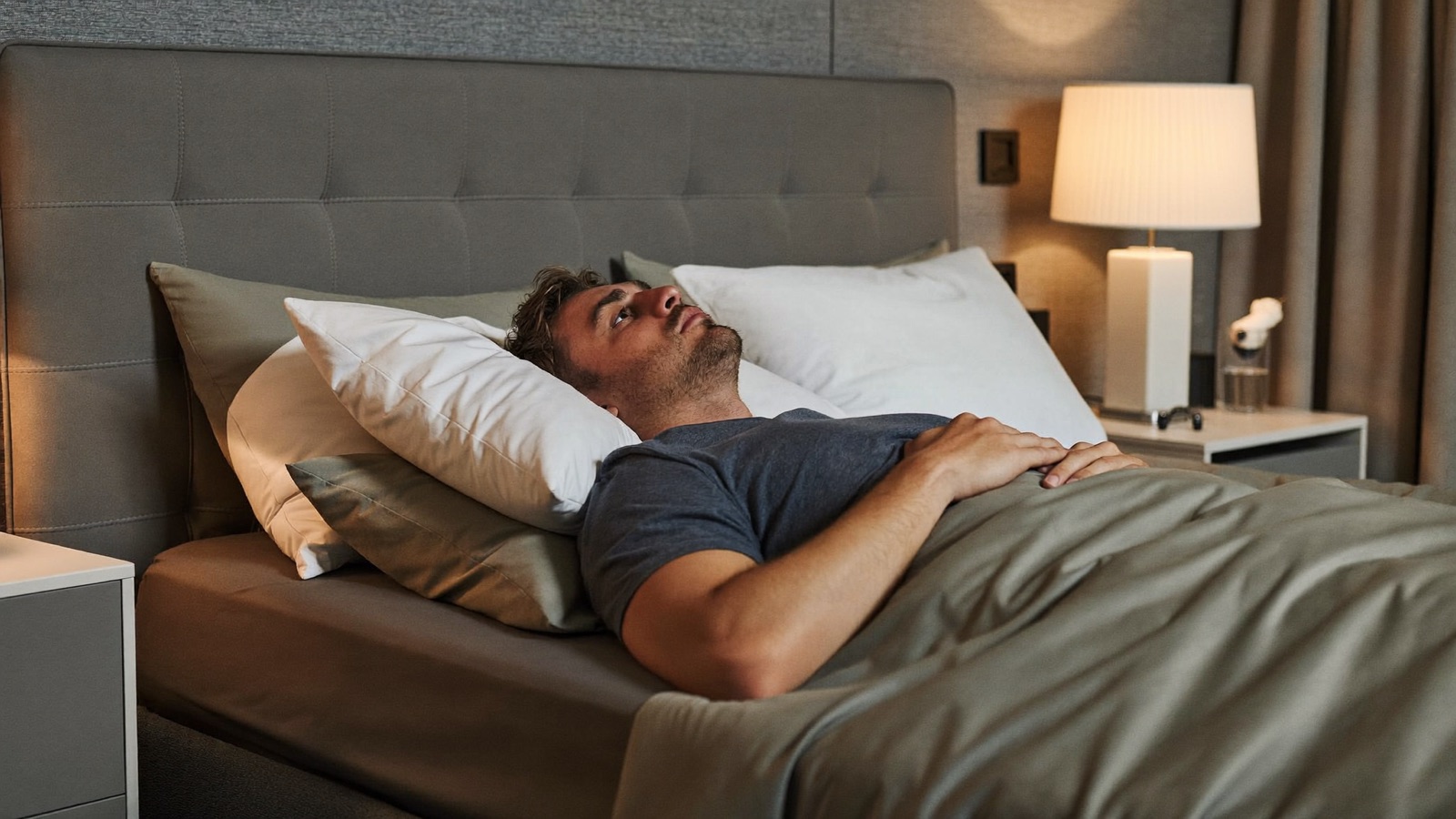
Most people are surprised that sleep, not pain, is the hardest part of the first week after surgery. You are tired, your scalp feels tight and tender, and you have been told to keep your head up and your grafts untouched while doing the one thing that normally involves pressing your head into a pillow for eight hours. Knowing how to sleep after a hair transplant makes a real difference to swelling, to comfort and to protecting the grafts while they settle. This guide covers the position to use, how long to keep it up, how to set up your bed, and how to get through the restless nights that most patients have in the first few days.
How You Should Sleep After a Hair Transplant
The short answer: sleep on your back with your head and upper body raised at roughly 45 degrees for the first five to seven nights. Use a recliner, a wedge pillow or several firm pillows, and add a travel pillow around your neck so your head cannot roll to the side. Most patients can return to a normal flat position after about ten days, and to side sleeping once their clinic confirms the grafts are secure.
Two goals sit behind that advice. The first is reducing swelling, which gravity helps with when your head is above your heart. The second is keeping the recipient area, where the grafts were placed, away from any contact with the pillow while the grafts anchor. Both goals matter most in the first few nights and fade steadily after that.
Your own clinic's instructions take precedence over any general guide. The size of the procedure, whether the crown was treated, and how your scalp is healing can all change the advice slightly, and the people who did the work know your case.
Why Elevation Matters: Swelling and Graft Protection
Swelling after a hair transplant is normal. The local anaesthetic and tumescent fluid used during the procedure, plus the body's own inflammatory response, cause fluid to collect in the forehead and sometimes around the eyes. It usually peaks around day two to four and clears by the end of the first week.
Sleeping with your head raised helps that fluid drain downward and away rather than pooling in the forehead overnight. Patients who sleep flat in the first few nights tend to wake with more noticeable swelling, sometimes reaching the eyelids. It is not dangerous, but it is uncomfortable and it makes the first week more visible to other people.
The second reason is graft protection. In the first several days each graft sits in a small incision supported by early healing rather than by new tissue. A pillow pressing or rubbing against the recipient area can disturb scabs and, in the earliest nights, potentially the grafts themselves. Sleeping on your back with your head supported keeps the front and top of the scalp away from the pillow entirely. The Nova Medical FUE protocol explains how grafts are placed and why the first days of anchoring are treated so carefully.
The Elevation Timeline: Night by Night
The restrictions are strictest at the start and relax quickly. This table is a general pattern to confirm with your clinic.
| Period | Recommended position | Main reason |
| Nights 1 to 3 | On your back, head and torso raised about 45 degrees, travel pillow around the neck | Swelling control and full protection of fresh grafts |
| Nights 4 to 7 | On your back, raised about 30 to 45 degrees | Swelling is easing, grafts are still anchoring |
| Nights 8 to 10 | Gradually lower toward a normal pillow height, still on your back | Grafts are close to secure, swelling usually gone |
| Night 10 to 14 onward | Normal position for most patients, including on your side, once cleared | Grafts are secure and most scabs have shed |
| Weeks 3 to 4 | Any comfortable position | No meaningful risk from normal sleeping |
The most important change happens at around day ten. Before then, the pillow is something to manage carefully. After it, sleep is mostly about comfort again. Our hair transplant recovery guide places this milestone alongside washing, exercise and the return to work, and the week-by-week recovery breakdown walks through each stage of the first month in more detail.
Setting Up a Recliner or Pillow Wedge Properly
The right setup makes the difference between a few hours of broken sleep and a reasonable night. Prepare it before the day of your procedure so you are not improvising when you get home tired.
A recliner is often the most comfortable option for the first two or three nights. It holds you at a consistent angle, it stops you rolling onto your side, and it is easy to get in and out of. If you have one, place it somewhere quiet and cool, and add a light blanket.
A wedge pillow is the next option and works well in your own bed. A foam wedge raises your upper body as a single surface, which is more stable than a stack of pillows that shift during the night. Place a soft pillow on top for your neck, positioned so it supports the back of your head and neck rather than the crown if the crown was treated.
Stacked pillows work if that is what you have. Use firm pillows, build the stack so your back is supported along its length rather than just your head, and add one under your knees to stop you sliding down the bed during the night.
Bedroom setup checklist: wedge pillow, recliner or three to four firm pillows; a travel pillow for your neck; an old, clean, dark pillowcase or a disposable cover; a towel under your head for the first night; a pillow under your knees; a cool room with a fan if possible; water, any prescribed medication and your phone within reach so you do not need to bend or twist in the night.
The Travel Pillow: Small Item, Big Difference
A U-shaped travel pillow worn around the neck is one of the most useful things you can have in the first week. When you fall asleep sitting up, your head naturally tips to one side. The travel pillow keeps it centred, which stops the side of the scalp or the recipient area from rolling onto the main pillow.
Wear it with the opening at the front so it supports the back and sides of your neck. If your crown was treated, make sure the main pillow behind you supports your upper back and neck, so the back of your head is not resting directly on the crown grafts. Some clinics provide a specific pillow for this purpose. If yours does, use it as instructed.
Side Sleeping and Stomach Sleeping: When They Become Safe
Habitual side and stomach sleepers usually find the first week the most difficult, because the body tries to return to its usual position during the night.
Side sleeping is generally avoided for the first seven to ten days. Lying on your side presses one side of the scalp into the pillow, which matters if grafts were placed at the temples or along the side of the hairline, and it also tends to increase swelling on that side of the face. Most patients return to side sleeping at around ten to fourteen days, once the clinic confirms the grafts are secure.
Stomach sleeping puts the forehead and hairline directly against the pillow, so it is the last position to return to. Many clinics suggest waiting around two weeks, sometimes longer after a large hairline procedure.
If you wake up and find you have turned onto your side, do not panic. Move back gently, look at the area in good light in the morning, and contact your clinic if you see fresh bleeding or a hair with a visible bulb on the pillow. Our guide to what to do if you scratch or bump a graft explains how to tell whether anything was actually dislodged, which in most cases it was not.
Protecting the Donor Area at Night
The donor area at the back of the head is where follicles were extracted. It contains no grafts to dislodge, but it is still a healing wound, and in a back-sleeping position it is the part of your scalp in contact with the pillow.
For the first night or two there may be some light oozing from the donor area. That is normal, and it is why a towel or an old, dark pillowcase is worth using. Change to a clean pillowcase every night or two in the first week to keep the area clean. Avoid rough fabrics, and do not use a hot water bottle or heating pad behind your head, since heat increases swelling.
The donor area often itches as it heals, particularly at night when you are warm and still. If that is keeping you awake, our article on why your scalp itches after a hair transplant covers safe ways to manage it without touching the grafts.
Pillowcases, Clothing and What To Put Down Before Bed
A few practical choices make the first nights easier.
- Pillowcases. Use a clean, smooth cotton or satin pillowcase. Dark colours hide any small marks from the first night. Change it regularly in the first week.
- Clothing. Wear a button-up or zip-front top for the first several days so you never have to pull anything over your head, at night or in the morning.
- Headwear. Do not sleep in a hat, beanie or hood in the first weeks. It traps heat, rubs the scalp and can catch scabs when removed. Our guide to wearing a hat after a hair transplant covers when daytime headwear is appropriate.
- Room temperature. Keep the room cool. Heat and sweat increase swelling, itch and discomfort.
- Partners and pets. Consider sleeping alone for the first few nights, or at least keeping pets out of the bed. An accidental elbow or a cat landing on your head is a more common problem than people expect.
Dealing With Poor Sleep in the First Week
Most patients sleep less well than usual for the first two or three nights. The unfamiliar position, mild soreness and a tight feeling across the scalp all play a part. That is normal and improves quickly as swelling settles.
Several things help. Take any prescribed pain relief as directed, ideally timed so that it is working when you go to bed. Avoid alcohol in the first days, both because it can affect healing and swelling and because it disrupts sleep quality. Keep caffeine to the morning. A short walk in the afternoon, once your clinic allows light activity, makes it easier to fall asleep at night.
If your clinic has suggested an evening antihistamine for itching, it can also help with sleep. Our guide to medications after a hair transplant explains what is typically prescribed and why. Do not add sleeping tablets or other medication without checking with your clinic first.
Finally, plan your first few days so that broken sleep does not matter. Many patients find a short nap in the recliner during the afternoon makes up for a restless night. If you are returning to work quickly, schedule the first days back to be lighter where possible.
Planning Your Recovery Before Your Procedure?
A private assessment with Dr. Martin Jugenburg (FRCSC) covers what the first week looks like, how to prepare your home and what to expect night by night. If you are already a Nova Medical patient, call us any time something feels wrong.