
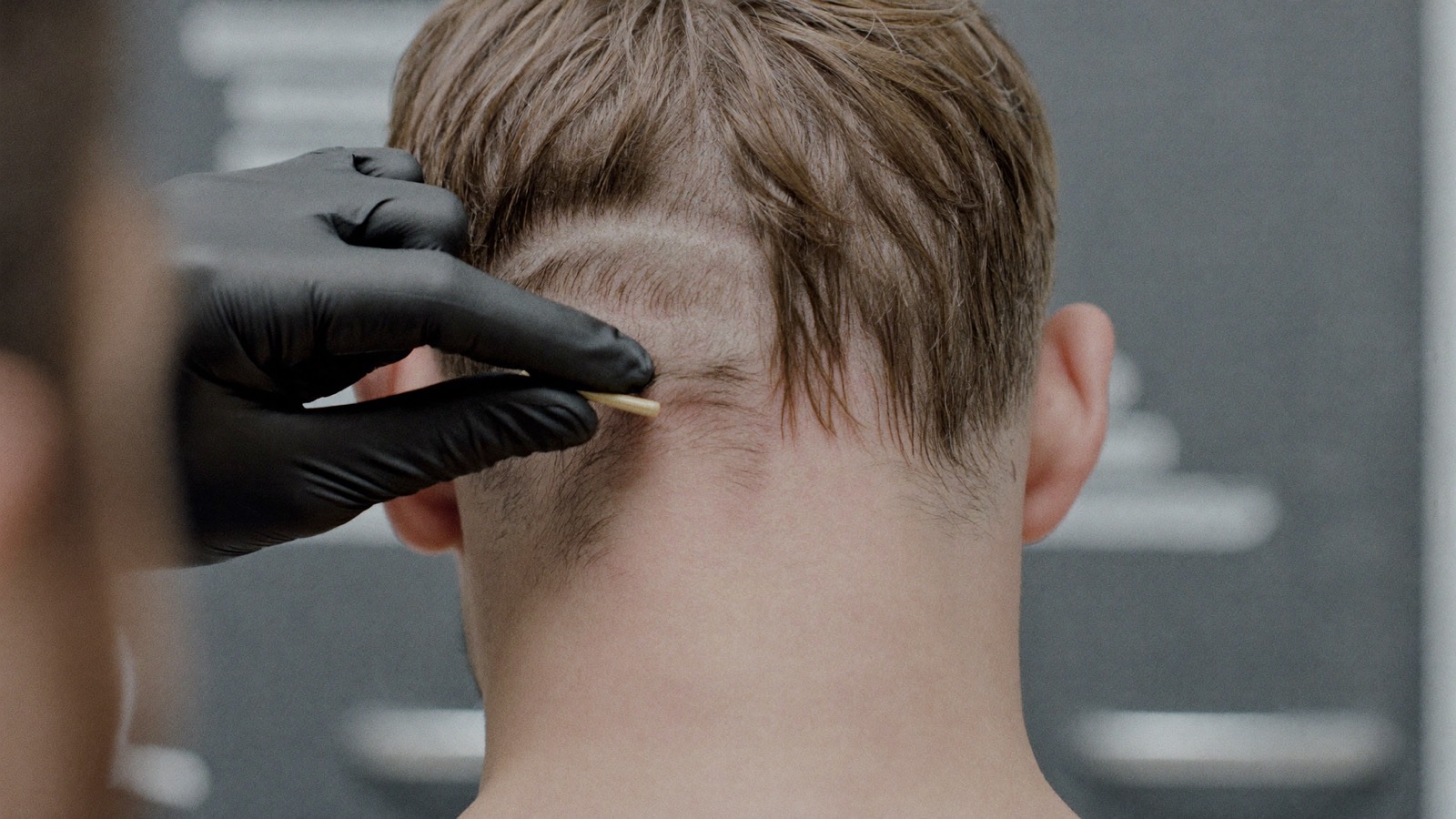
For many people, the most off-putting part of a hair transplant is not the procedure itself but the shaved head that usually comes with it. A no-shave hair transplant offers a way around that: follicles are harvested and placed while most of your existing hair stays at its normal length, so the procedure is far less obvious in the days that follow. It is a genuinely useful option, but it is not suitable for everyone, and it involves trade-offs that are rarely explained clearly. This guide covers how it works, who qualifies, why graft numbers are lower, and when a full shave is the better choice.
What a No-Shave Hair Transplant Is
The short answer: a no-shave hair transplant is a form of FUE where the donor area is not fully shaved. Instead, individual hairs are trimmed in small, hidden areas, or in narrow strips that the surrounding longer hair covers, and follicles are extracted from there. The recipient area may also be worked on between existing hairs. The result is a procedure that is much less visible afterwards.
There are a few variations. In a fully unshaven approach, individual hairs are trimmed only where each follicle will be taken. In a partial shave, one or more narrow bands are shaved at the back of the head and hidden under longer hair above them. In both cases, the aim is the same: to let you return to normal life without a freshly shaved head announcing that you have had a procedure.
No-shave work is a technique choice within FUE hair transplant, not a separate procedure. The same principles of careful extraction, graft handling and natural placement apply; the difference is in how the hair around the working area is managed.
How the Donor Area Is Harvested Without a Full Shave
In a standard FUE procedure, the donor area is shaved short so the surgical team can see every follicle clearly, assess its angle and extract it efficiently. In a no-shave procedure, that visibility has to be created another way.
For a fully unshaven approach, the team identifies suitable follicles among longer hair, trims those individual hairs close to the skin, and extracts them one by one. This is painstaking. Each graft requires extra time to locate, trim and extract while protecting the surrounding hair.
For a partial shave, one or more horizontal bands are shaved in the donor area, usually low enough that the hair above falls naturally over them. Extraction then proceeds much like standard FUE within those bands. This approach balances discretion with efficiency and is often the practical middle ground.
The way grafts are handled, stored and placed is the same whichever approach is used. The Nova Medical FUE protocol explains how grafts are protected between extraction and placement.
Who Qualifies: Hair Length, Density and Graft Count Limits
No-shave suitability depends on several factors, and not everyone who would like the option is a good candidate for it.
- Graft requirement. No-shave work suits smaller to moderate procedures, such as refining a hairline, filling the temples or adding density to a limited area. Large sessions are usually better done with a shaved or partially shaved donor area.
- Donor density. A dense donor area makes it easier to find suitable follicles among longer hair without visibly thinning any single spot.
- Hair length. Hair needs to be long enough to cover the trimmed areas or shaved bands, typically a few centimetres at the back and sides.
- Hair type. Straight or gently wavy hair is usually easier to work with. Very curly hair can make follicle angles harder to judge without shaving.
- Recipient area. If there is existing hair in the area being treated, placing grafts between it without shaving requires great care to avoid damaging native follicles.
Candidacy is always decided after examining your donor area and discussing your goals. If your plan needs a large number of grafts, a partial shave or full shave may be recommended even if no-shave was your first preference.
Why Graft Numbers Are Lower With an Unshaven Approach
The main limitation of no-shave work is the number of grafts that can practically be taken in one session. Locating and trimming individual follicles among longer hair takes much longer than extracting from a shaved area, so the same session time produces fewer grafts.
There is also a quality consideration. Visibility matters for judging the angle and depth of each follicle. With longer hair in the way, the team must work more slowly to keep extraction accurate. For a small or moderate procedure, that is manageable. For a large one, it would mean either an extremely long day or compromising on precision, and neither is a good trade.
That is why some patients split their treatment, using a no-shave or partial-shave approach for a first, smaller session focused on the hairline, then revisiting the plan later. Our guide to how many grafts you need explains how graft counts relate to coverage, which helps when deciding whether a no-shave approach can meet your goals.
Shaved, Partial Shave and Unshaven Compared
| Factor | Full shave | Partial shave | Unshaven |
| Visibility after surgery | Most noticeable | Low, bands hidden under longer hair | Lowest |
| Practical session size | Largest | Moderate to large | Small to moderate |
| Time per graft | Shortest | Moderate | Longest |
| Visibility for the surgical team | Clearest | Good within the bands | Most challenging |
| Hair length needed | None | Enough to cover the bands | Enough to cover trimmed spots |
| Typical fee | Standard | Higher | Highest |
| Usually suits | Larger plans, maximum efficiency | Discretion with a larger plan | Small, discreet procedures |
The Time and Cost Trade-Off
Because unshaven work takes longer per graft and demands more of the surgical team, it usually costs more than the same number of grafts with a shaved donor area. A partial shave typically falls between the two. The exact difference depends on the number of grafts and the approach, so it makes sense to discuss it with a specific plan in front of you. Our hair transplant cost guide for Toronto explains how procedures are priced.
The question to weigh is how much the discretion is worth to you. For someone whose work or personal circumstances make a visibly shaved head a real problem, the extra time and cost of a no-shave approach can be well worth it. For someone who can take a couple of weeks off or is comfortable with a short haircut, a shaved approach is usually more efficient and allows a larger session.
Partial Shave as the Middle Option
For many patients, a partial shave is the most practical choice. It allows a meaningful number of grafts to be extracted efficiently within the shaved bands, while the longer hair above keeps those bands hidden from normal view. Within a few weeks, the shaved bands have grown back enough to blend in completely.
A partial shave suits people with hair long enough at the back to cover the bands, usually a few centimetres, and a donor area that can provide the required grafts from a limited zone. It is often the right answer when someone wants discretion but needs more grafts than a fully unshaven session can provide.
Recovery and Concealment Advantages
The clearest benefit of a no-shave approach shows up in the first two weeks. With longer hair still in place at the back and sides, the donor area is largely hidden from the start. In the recipient area, existing hair can help disguise the small scabs and redness while they heal, depending on how much hair is already there.
That makes returning to work or social life much easier for many patients. Our guide on how to hide a hair transplant at work covers hairstyles, headwear and timing in more detail, and many of those tips work especially well after a no-shave or partial-shave procedure.
The healing process itself is the same as any FUE procedure. Grafts still need protecting for the first ten days or so, the usual aftercare applies, and transplanted hairs typically shed in the following weeks before regrowing over several months.
Preparing for a No-Shave Procedure
A little preparation makes a no-shave or partial-shave procedure go more smoothly and makes the result easier to conceal afterwards.
- Grow your hair to the right length. Your clinic will tell you how long the hair at the back and sides needs to be to cover trimmed spots or shaved bands, usually a few centimetres. Avoid a haircut in the weeks before the procedure.
- Discuss your usual hairstyle. Knowing how you normally wear your hair helps the team position any shaved bands where they will be hidden most naturally.
- Plan for a longer day. Unshaven work takes more time per graft, so the procedure day is often longer than a shaved session of the same size.
- Follow the usual pre-operative advice. Medication, alcohol and smoking guidance is the same as for any FUE procedure, and your clinic will provide written instructions.
After the procedure, avoid cutting your hair short at the back until the shaved bands or trimmed areas have grown in, typically several weeks, so the concealment holds while everything heals.
When a Full Shave Is Genuinely the Better Choice
A full shave is not a lesser option. In many cases it is the right one. It gives the surgical team the clearest possible view of every follicle, allows the largest number of grafts to be taken efficiently in one session, and usually keeps the cost lower for the same graft count.
A full shave is usually recommended when the plan requires a large number of grafts, when hair is very curly or difficult to work with unshaven, when the donor area is less dense and needs careful spreading of extractions across a wide zone, or when the patient is comfortable with a short haircut for a few weeks. Hair grows back quickly, and many patients find that a short, deliberate haircut attracts little attention.
The right choice comes from balancing your goals, your hair and your circumstances. At our Toronto clinic, Dr. Martin Jugenburg, a Royal College-certified plastic surgeon (FRCSC), oversees each assessment, including whether a shaved, partially shaved or unshaven approach suits your plan.
Wondering If No-Shave Is Right for You?
A private assessment with Dr. Martin Jugenburg (FRCSC) looks at your donor area, your hair and your goals, and explains whether an unshaven, partial-shave or shaved approach makes the most sense. No cost and no obligation.