
Hamilton patients looking for a hair transplant have a short, well-connected trip rather than a long one. Nova Medical Hair Transplant is located in downtown Toronto at 100 Front Street West, roughly 70 kilometres from Hamilton and directly opposite Union Station, which is where the GO train from Hamilton terminates.
That matters more than it sounds. Hair restoration is a surgical day procedure followed by a short set of follow-ups, so the practical question for anyone outside Toronto is not whether the travel is possible but how many trips it takes, how long each one is, and whether you can do it without arranging a hotel. For most patients from Hamilton, Stoney Creek, Dundas, Ancaster, Waterdown and Grimsby, the answer is a same-day return trip.
This page covers what the journey actually looks like from Hamilton, how we structure consultations and surgery to keep the number of trips down, and which procedures are available. Your treatment itself is planned the same way as for any patient, and is overseen by Dr. Martin Jugenburg, a Royal College-certified plastic surgeon (FRCSC).
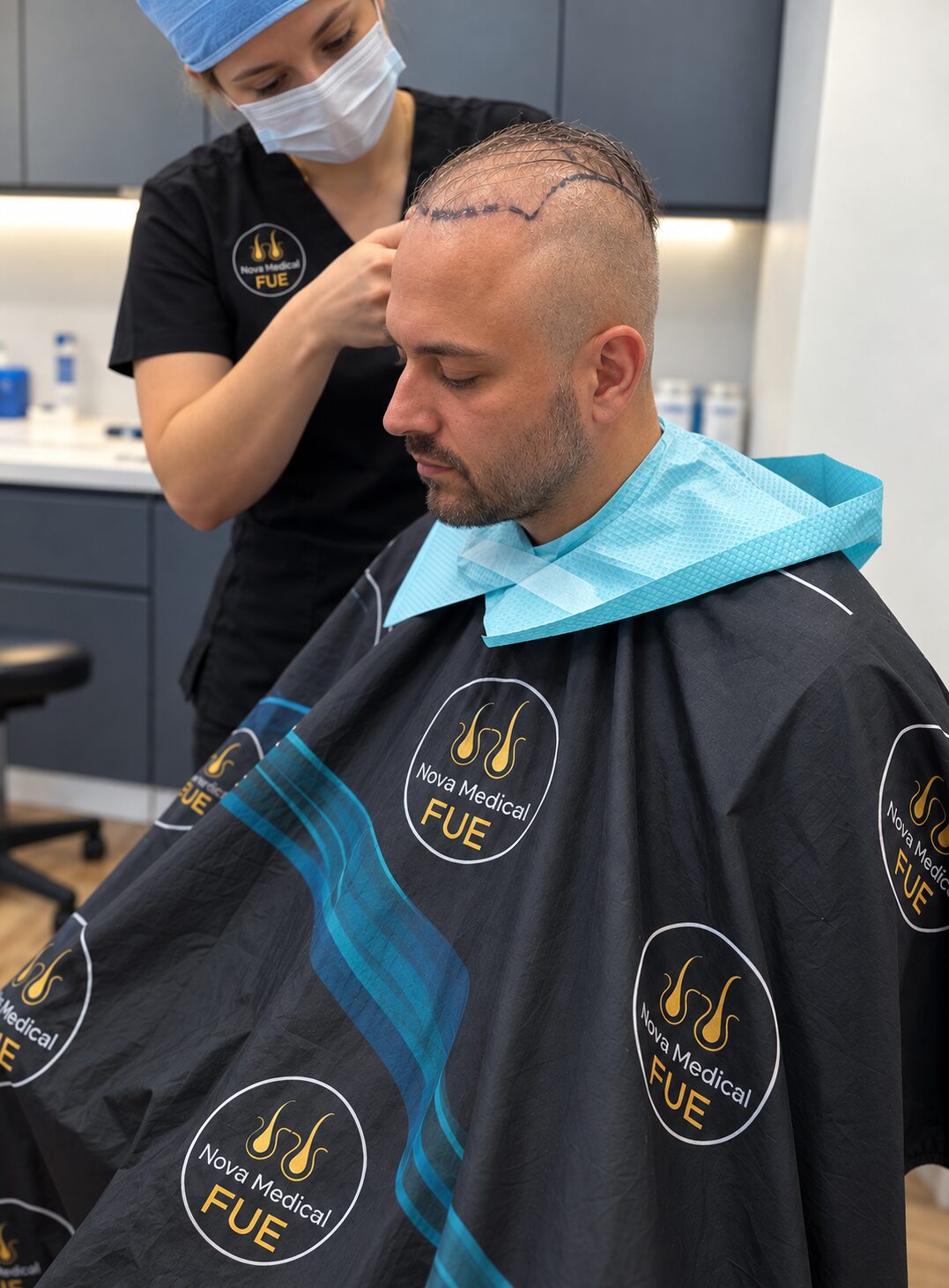
Hamilton has a substantial medical community, but surgical hair restoration is a narrow specialty. It is not general dermatology and it is not a cosmetic treatment that any clinic can add to a service list. A single FUE session can run six to eight hours and involves a surgeon planning the design and a trained surgical team handling thousands of individual grafts. Clinics equipped to do that work at volume are concentrated in larger centres, which is why patients across the Golden Horseshoe generally travel for it.
The practical consequence for a Hamilton patient is that the realistic choice is rarely local versus Toronto. It is more often Toronto versus a much longer journey, including the overseas packages that advertise heavily to Canadian patients. We wrote a detailed comparison of that trade-off in our guide to hair transplants in Toronto versus Turkey, and the single biggest difference is not the surgery itself but what happens in the twelve months afterwards. Complications, questions and follow-up assessments are straightforward when the clinic is an hour away and difficult when it is a long-haul flight away.
Being an hour from your surgical team also makes staged planning realistic. Hair loss is progressive, so a plan that protects your donor supply over a lifetime sometimes means a second procedure years later. That is a reasonable thing to commit to when the clinic is up the QEW.
The clinic is at 100 Front Street West in downtown Toronto. The two practical routes from Hamilton are the QEW and the Lakeshore West GO train, and which one suits you depends mostly on the day and whether you are driving yourself home.
| Route | From | Typical journey |
| Driving, QEW east | Downtown Hamilton | Around 70 km, commonly 60 to 75 minutes outside peak hours and longer during weekday rush |
| GO train, Lakeshore West | Hamilton GO Centre or West Harbour GO | Direct to Union Station, commonly around 60 to 75 minutes |
| GO train, Lakeshore West | Aldershot GO | Often the faster option for west Hamilton, Dundas and Waterdown |
| On arrival at Union | Union Station | The clinic is directly across Front Street, a walk of a few minutes |
Treat those times as planning estimates rather than guarantees, since QEW traffic varies considerably. For surgery day we recommend building in a buffer and, where possible, taking the train.
You should not drive yourself home after a hair transplant. The procedure is done under local anaesthetic with oral sedation, and sedation makes driving unsafe for the rest of the day. That leaves three options: someone drives you, you take the train, or you stay overnight.
Because the clinic sits directly opposite Union Station, the Lakeshore West line removes the problem entirely for most Hamilton patients. You arrive, walk across the road, and travel home the same way without needing a driver or a hotel. It is the single practical advantage of this location for anyone coming from the west end of the Golden Horseshoe.
This is the question most out-of-town patients ask first. For a straightforward case from Hamilton it is usually two in-person visits, and the first can often be handled remotely.
A consultation to measure your donor density, map your pattern of loss and agree a graft count and plan. This can be done in person or remotely, so many Hamilton patients do not travel at all for this stage.
A single full day at the clinic, commonly six to eight hours depending on graft count. You go home the same day with written aftercare instructions and the medications you need.
Early follow-up is usually handled by photo and phone, with in-person review scheduled around your availability rather than a fixed calendar. Longer-term checks fit easily into a day trip.
If you would rather not travel for the initial assessment, or you want the detail on remote consultations, accommodation and aftercare at a distance, that is all set out on our out-of-town patients page. It covers the support side of travelling for treatment, while this page covers the specifics of the trip from Hamilton.
Planning around work is worth doing properly. Most patients take between a few days and two weeks before they are comfortable being seen as normal, which varies a lot by job type. Our guide to the best time to schedule a hair transplant covers how to pick a date around annual leave and seasonal considerations.
Hamilton patients have access to the same techniques as anyone attending from within Toronto. Which one is appropriate depends on your donor supply, the extent of your loss, your hair characteristics and how you wear your hair, and it is decided at assessment rather than chosen from a menu.
FUE, or follicular unit extraction, is the technique most patients ask about and the one most of our patients have. Individual follicular units are extracted from the donor area at the back and sides of the scalp and placed into the thinning area, leaving small dot scars rather than a line. It suits most patterns of loss and allows shorter hairstyles afterwards. The FUE page covers candidacy, the procedure itself and the recovery timeline in detail.
FUT remains appropriate for some patients, particularly where a high graft count is needed in one session. DHI uses an implanter pen for placement. Female hair restoration follows a different assessment pathway, since female pattern loss is often diffuse and candidacy is narrower. For patients not yet ready for surgery or looking to support existing hair, PRP treatment is a non-surgical option.
If you are trying to work out roughly what scale of procedure you are looking at before booking, our guide to how many grafts you need explains how counts are decided and why a higher number is not automatically better. Nova Medical does not overharvest grafts, and a plan that protects your donor area over the long term sometimes means a more conservative count than you were expecting.
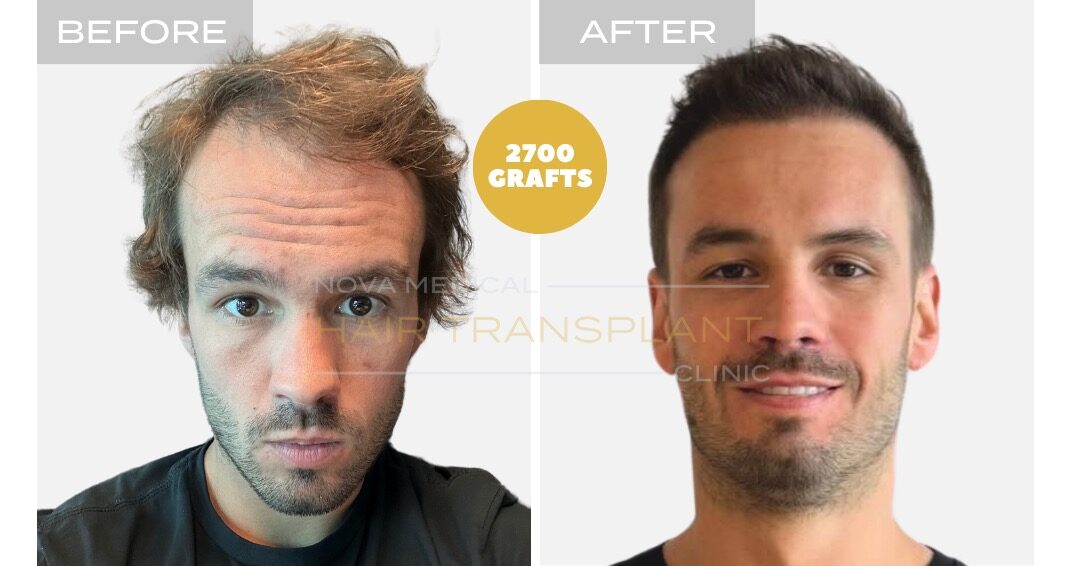
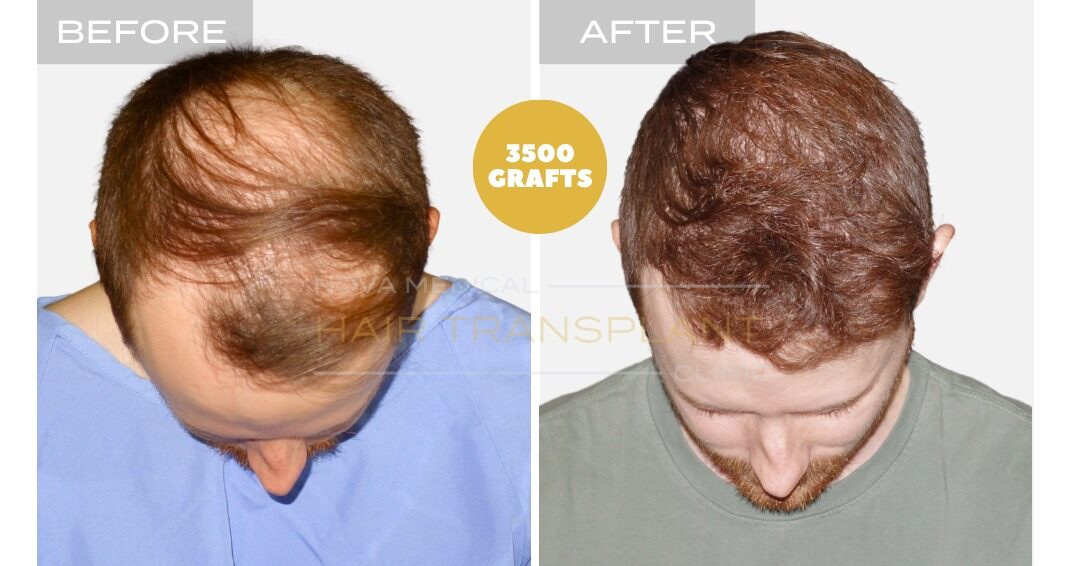
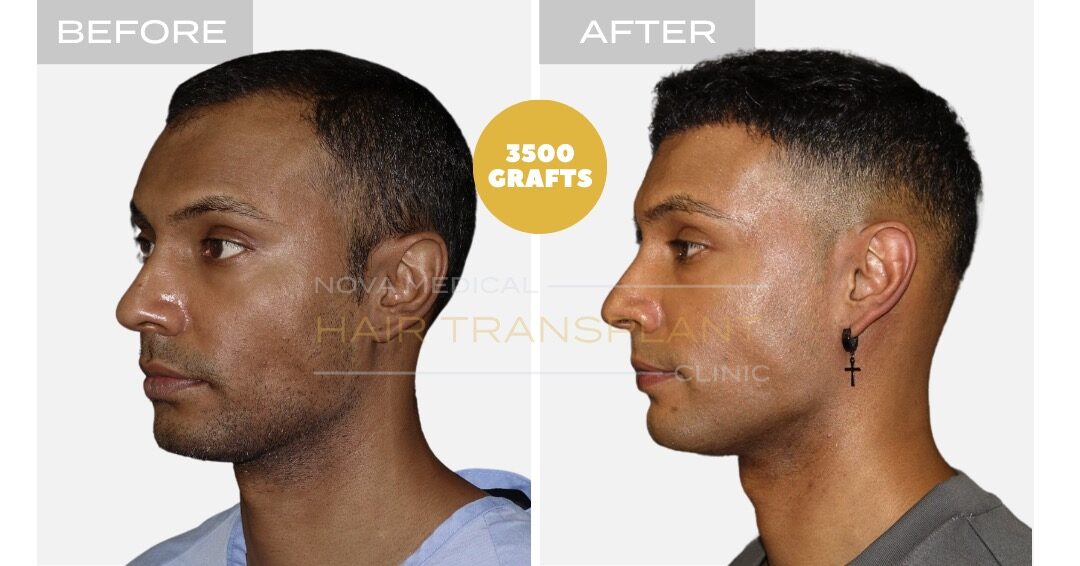
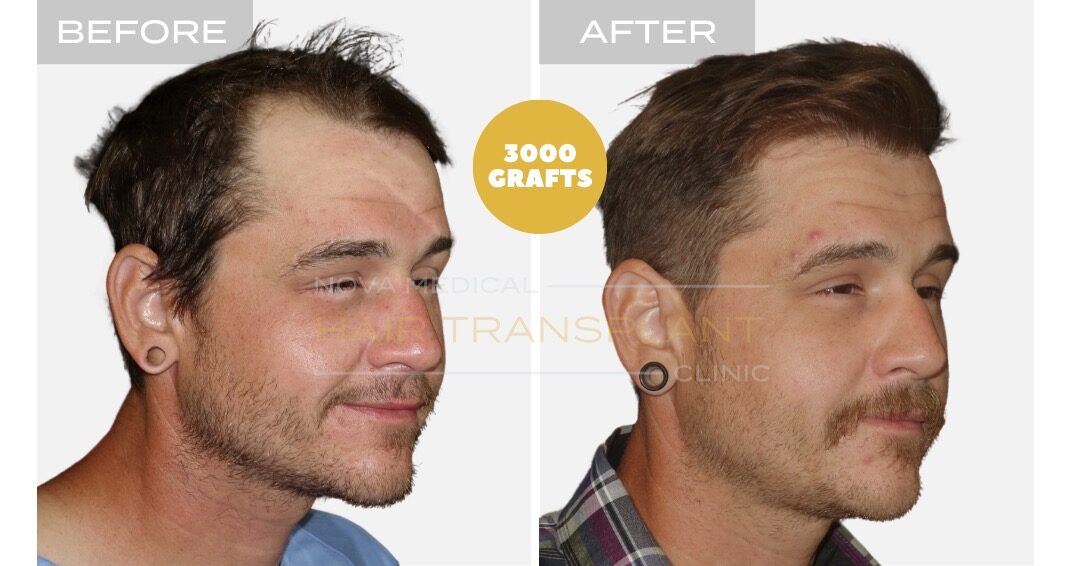
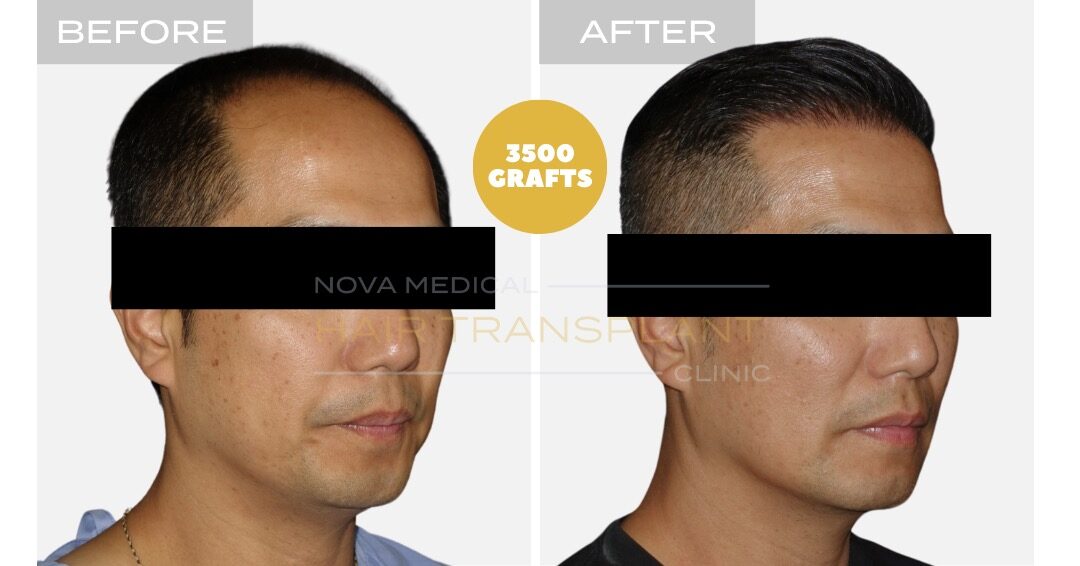
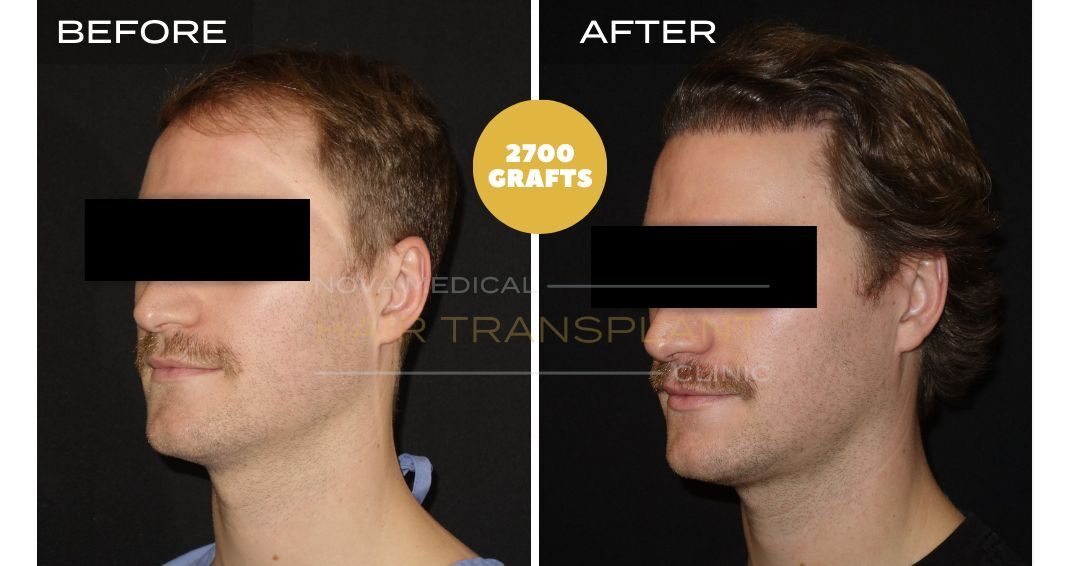
Cost is driven by the number of grafts, the technique used and the length of the surgical day, not by where you travel from. A patient from Hamilton pays on the same basis as a patient from downtown Toronto. Our hair transplant cost page sets out what goes into the figure and what is included.
Hair restoration for pattern hair loss is considered cosmetic in Ontario, so it is not covered by OHIP and generally not by private benefit plans. It is worth checking your own plan rather than assuming, particularly where hair loss follows trauma, burns or surgery, since reconstructive cases are assessed differently.
The honest planning advice is to budget for the travel as part of the decision, but to recognise that from Hamilton it is a modest part of it. A return GO fare and a day off work is a different proposition from flights and a week abroad.
A private assessment with Dr. Martin Jugenburg (FRCSC) covers your donor supply, a realistic graft count and a written plan, with no obligation. If travelling for the assessment is inconvenient, ask about a remote consultation when you get in touch.