
Barrie sits roughly 90 to 110 kilometres north of downtown Toronto depending on where you start, which makes a hair transplant a planned day rather than a casual appointment. Nova Medical Hair Transplant is located at 100 Front Street West in downtown Toronto, directly opposite Union Station and at the southern end of Highway 400.
We see patients from across Simcoe County, including Innisfil, Bradford, Angus, Midhurst, Orillia, Alliston and the Collingwood and Wasaga Beach area. For most of them the honest summary is this: the drive is straightforward, the timing matters more than the distance, and the number of trips is lower than people expect because the initial assessment can usually be handled without travelling at all.
This page sets out the route and the realistic timings, how we structure visits to minimise the number of trips north and south, and which procedures are available. Treatment planning is overseen by Dr. Martin Jugenburg, a Royal College-certified plastic surgeon (FRCSC).
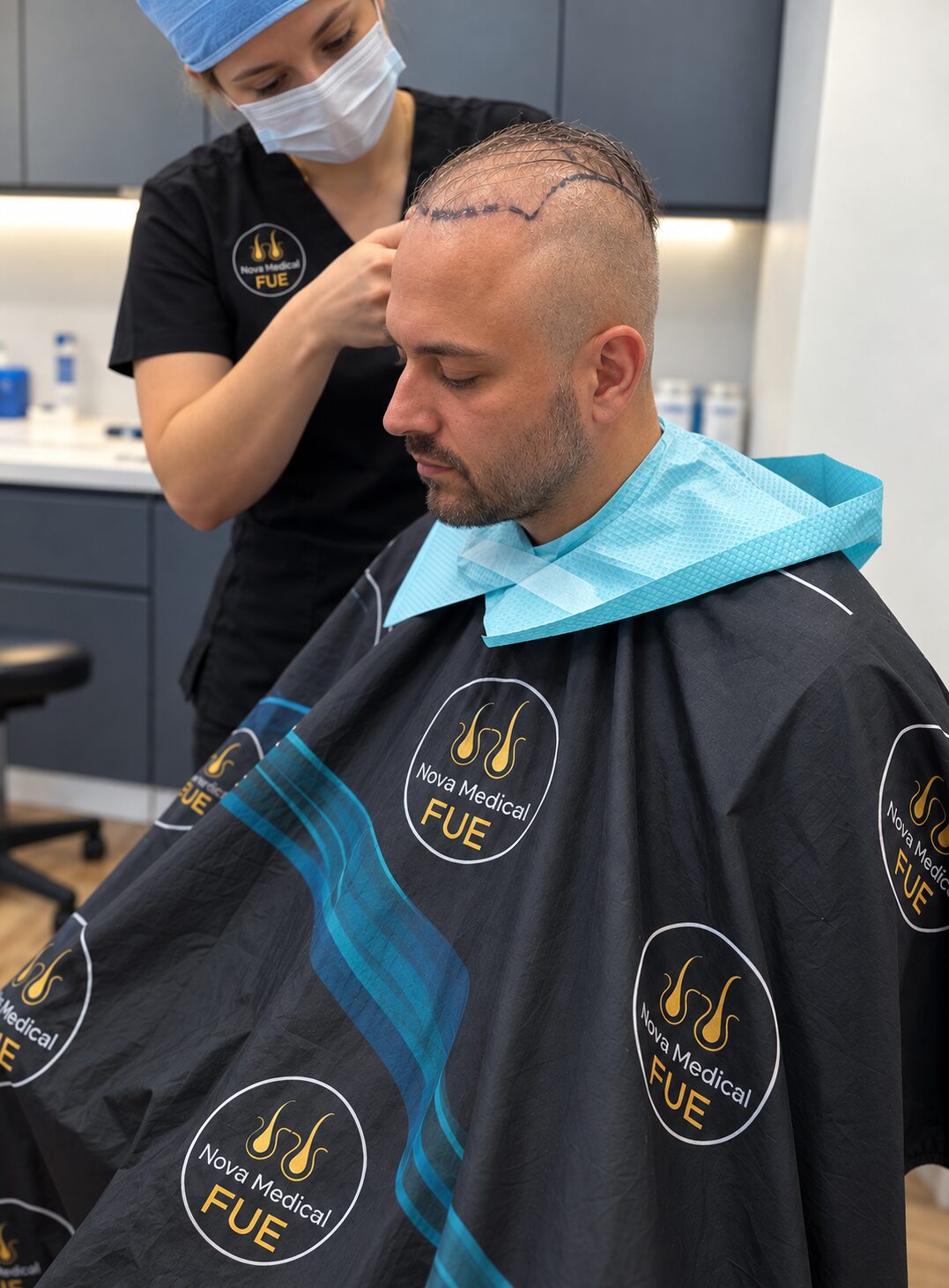
Surgical hair restoration is a specialty rather than a general service. A single FUE session commonly runs six to eight hours, requires a surgeon to design the hairline and plan the graft distribution, and needs a trained surgical team to handle thousands of individual follicular units without damaging them. That combination of time, team and case volume is why these clinics cluster in larger centres rather than spreading evenly across the province.
For a Barrie patient the realistic comparison is usually not local versus Toronto. It is Toronto versus somewhere much further away, including the overseas clinics that market heavily into Ontario. The difference that matters is not the day of surgery, it is the year that follows it. Our comparison of hair transplants in Toronto versus Turkey covers that in full, and the recurring theme is aftercare: questions at week three, a concern at month four, and a proper assessment of the result at twelve to eighteen months are all manageable with a drive down the 400 and awkward from another continent.
There is a second reason, which is staging. Pattern hair loss progresses, and a responsible plan protects your donor supply so that a second procedure remains possible years later if you need one. That is a far easier commitment to make when your surgical team is ninety minutes away.
There are two realistic routes, and unlike shorter trips into Toronto the choice genuinely matters here.
| Route | From | Typical journey |
| Driving, Highway 400 south | Barrie | Around 90 to 110 km, commonly 75 to 100 minutes outside peak, considerably longer on summer weekends and in winter weather |
| GO train, Barrie line | Allandale Waterfront GO or Barrie South GO | Direct to Union Station, commonly around 100 to 120 minutes, with a more limited timetable than the Lakeshore lines |
| Driving plus GO | Bradford or Aurora GO | A common compromise: drive the first stretch, then take a more frequent train into Union |
| On arrival at Union | Union Station | The clinic is directly across Front Street, a walk of a few minutes |
The first is the 400 itself. Northbound Friday afternoons and southbound Sunday evenings through the summer are heavily affected by cottage traffic, and a trip that takes ninety minutes in March can take well over two hours in July. For a morning surgical start that is manageable, but it is worth avoiding a Friday or Sunday appointment in peak season.
The second is winter. A procedure booked for January or February should have a weather contingency, and it is sensible to plan an overnight stay rather than attempt a late return in poor conditions. This is one of the few genuine practical differences between booking from Barrie and booking from inside the GTA.
The procedure is carried out under local anaesthetic with oral sedation, which rules out driving for the remainder of the day. Over a distance like this the options narrow to three: someone drives you both ways, you take the Barrie GO line, or you stay overnight in Toronto and travel back the next morning. More Barrie patients choose the overnight option than Hamilton or Oakville patients do, and for a long session in winter it is usually the sensible call.
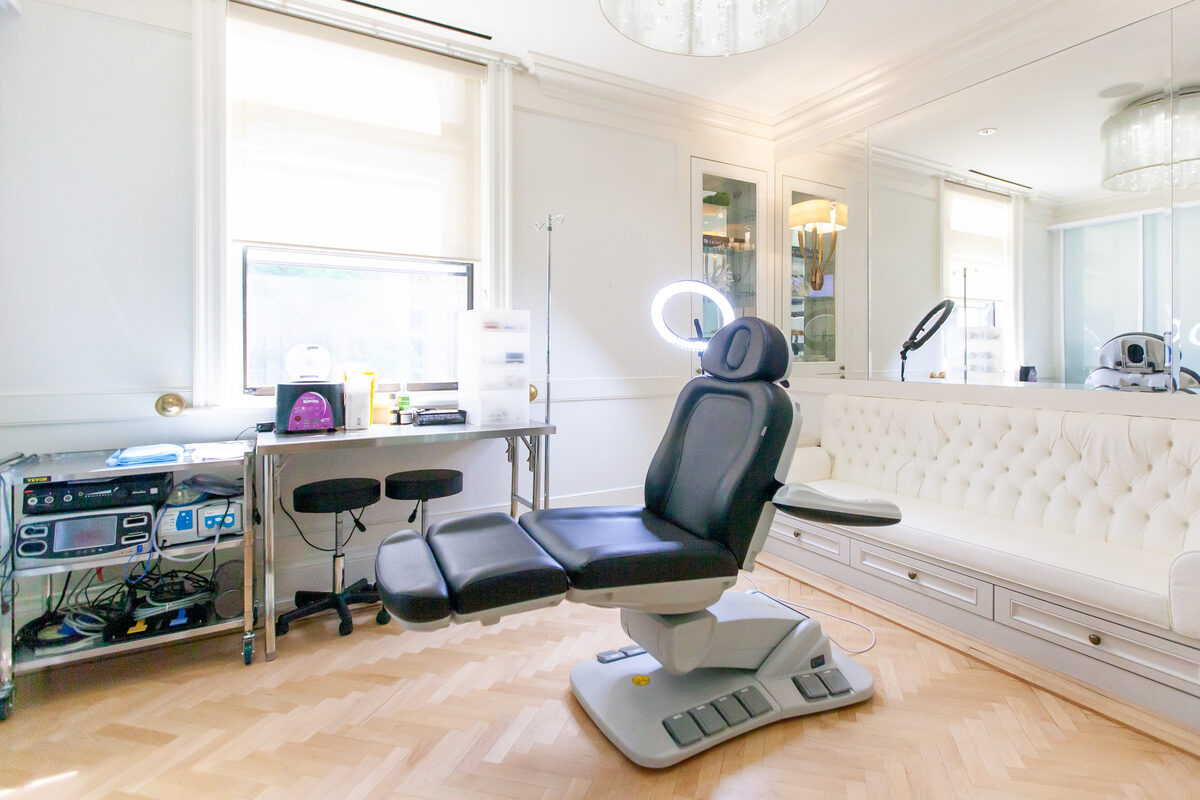
Over this distance the number of journeys matters more than the length of any single one. The structure below is designed so that most Barrie patients travel to Toronto once.
Donor density, pattern of loss, graft count and a written plan. For patients at this distance we will normally conduct this remotely by photo and video unless something needs examining directly.
One full day at the clinic, commonly six to eight hours depending on graft count. You leave with written aftercare instructions and your medications, and you will need a driver or an overnight stay.
The first weeks are handled by photo and phone. In-person review is scheduled around your availability rather than a fixed schedule, so it can wait for a trip you were making anyway.
The practical detail on remote consultations, accommodation and managing aftercare at a distance is set out on our out-of-town patients page, which applies to every patient travelling in. This page covers what is specific to the journey from Barrie and Simcoe County.
Scheduling is worth thinking about early. Most patients want between a few days and two weeks before they are comfortable being seen as usual, and that window interacts with both your work calendar and the seasonal driving considerations above. Our guide to the best time to schedule a hair transplant goes through how to choose a date, and the week-by-week recovery guide sets out what each stage actually looks like.
The full range of techniques is available regardless of where you travel from. Which one is appropriate is a clinical decision made at assessment, based on your donor supply, the extent and pattern of your loss, your hair characteristics and how you wear it.
FUE, or follicular unit extraction, is the technique most patients ask about. Individual follicular units are taken from the donor area at the back and sides of the scalp and placed into the thinning area, which leaves small dot scars rather than a linear one and allows shorter hairstyles afterwards. The FUE page covers candidacy, what the day involves and the recovery timeline in detail, and is the best starting point if you are deciding whether this is the right route for you.
FUT remains the better option for some patients, particularly where a high graft count is required in a single session, which can be a relevant consideration when you are travelling a distance and want to minimise the number of procedures. DHI uses an implanter pen for placement. Female hair restoration follows a separate assessment pathway, as female pattern loss is frequently diffuse and surgical candidacy is narrower. PRP is available as a non-surgical option, though it requires repeat sessions, which is a genuine consideration at this distance.
If you want to understand the likely scale before you book, our guide to how many grafts you need explains how a count is arrived at. Nova Medical does not overharvest grafts. Where protecting your long-term donor supply means recommending a more conservative count or staging the work, that is what we will tell you, even where a larger single session would be more convenient for someone travelling in.
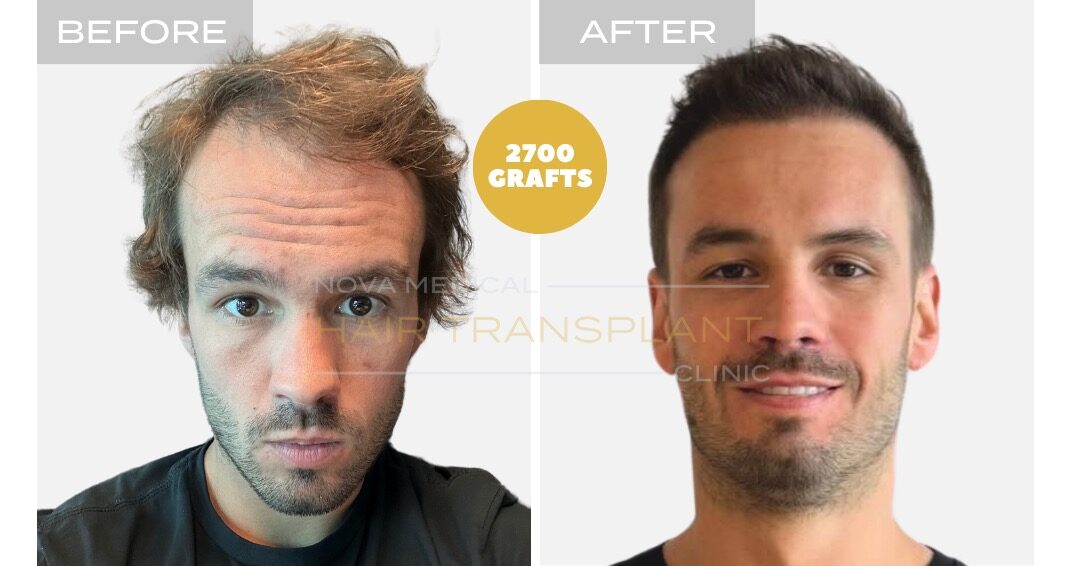
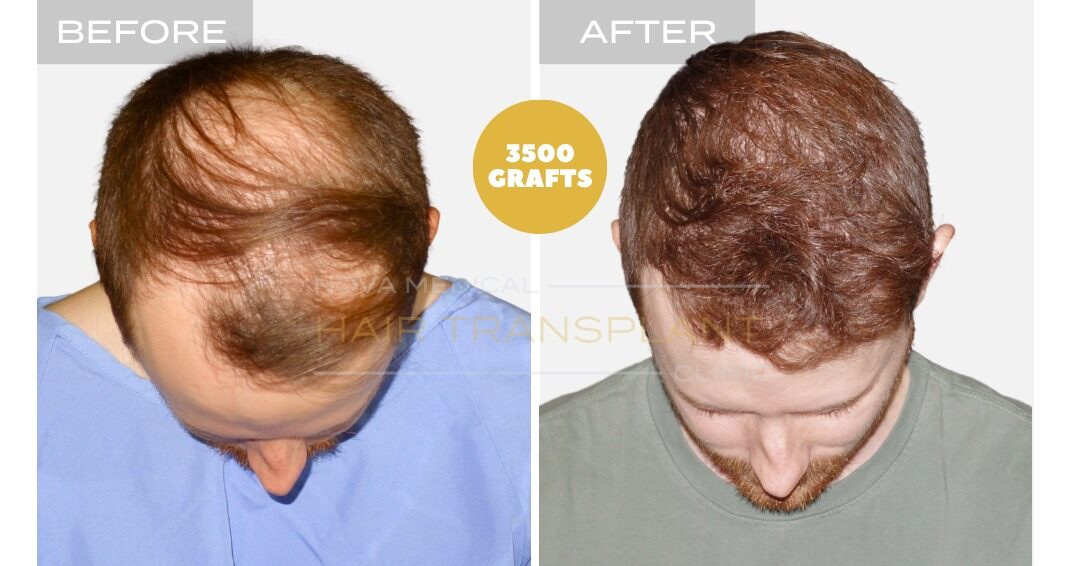
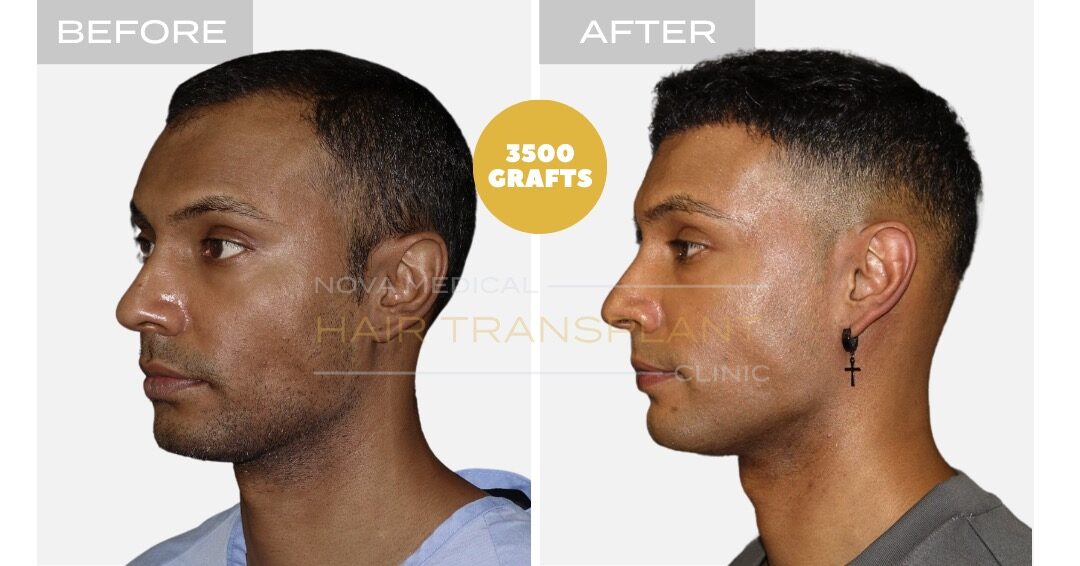
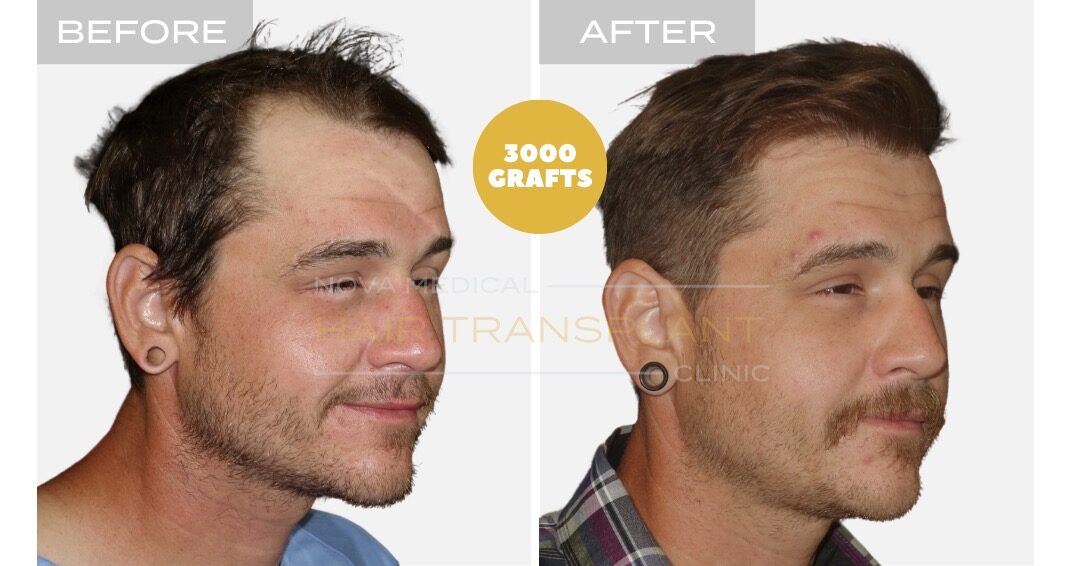
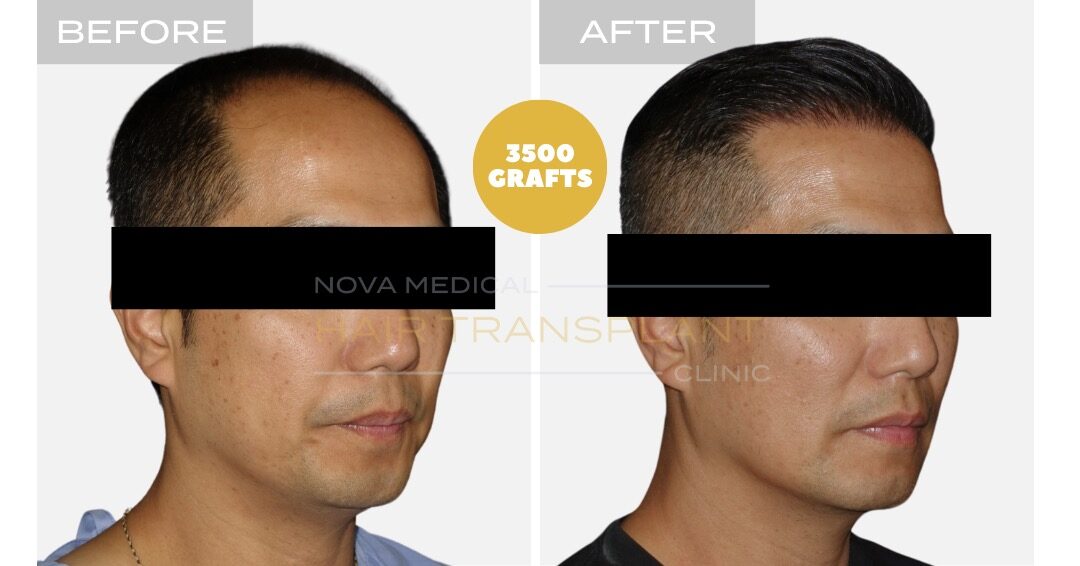
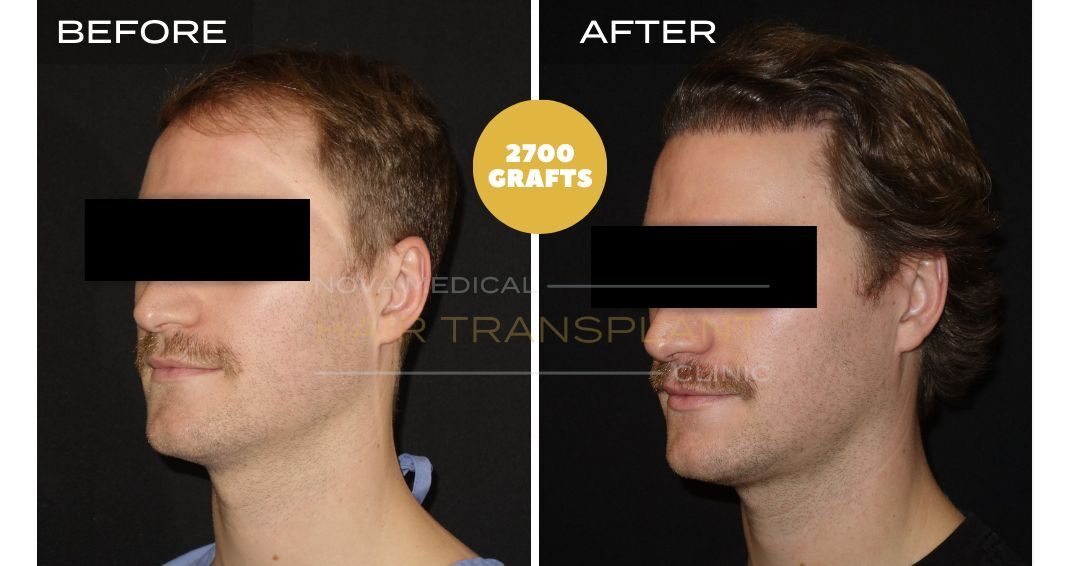
What you pay is determined by graft count, technique and the length of the surgical day. It does not change based on where you travel from, and there is no out-of-town surcharge. Our hair transplant cost page explains what drives the figure and what is included.
Hair restoration for pattern hair loss is treated as cosmetic in Ontario, so it is not covered by OHIP, and private benefit plans generally exclude it. Check your own plan rather than assuming. Hair loss following trauma, burns or previous surgery is assessed on a different basis, so mention those circumstances when you book.
When budgeting, include the realistic travel costs for your situation: fuel or a return GO fare, and the cost of a night in Toronto if you decide an overnight is the safer option. For most Barrie patients that remains a small share of the total, and considerably less than the travel component of an overseas procedure.
A private assessment with Dr. Martin Jugenburg (FRCSC) covers your donor supply, a realistic graft count and a written plan, with no obligation. Ask about a remote consultation when you get in touch so your first trip down the 400 is for the procedure itself.