
Of all the areas we see patients from, Oakville has the easiest journey. Nova Medical Hair Transplant is at 100 Front Street West in downtown Toronto, roughly 35 to 40 kilometres away and directly opposite Union Station, where the Lakeshore West GO line from Oakville terminates. The trip is short enough that it rarely shapes the decision at all.
That matters because hair restoration is not a single appointment. It is an assessment, a surgical day, and a set of follow-ups spread across the following year. From Oakville, Bronte, Glen Abbey, Clarkson and the surrounding area, each of those is a straightforward half day rather than an expedition, which makes in-person consultation and in-person follow-up genuinely practical rather than something you compromise on.
This page covers the routes and realistic timings from Oakville, how visits are structured, and which procedures are available. Treatment planning is overseen by Dr. Martin Jugenburg, a Royal College-certified plastic surgeon (FRCSC).
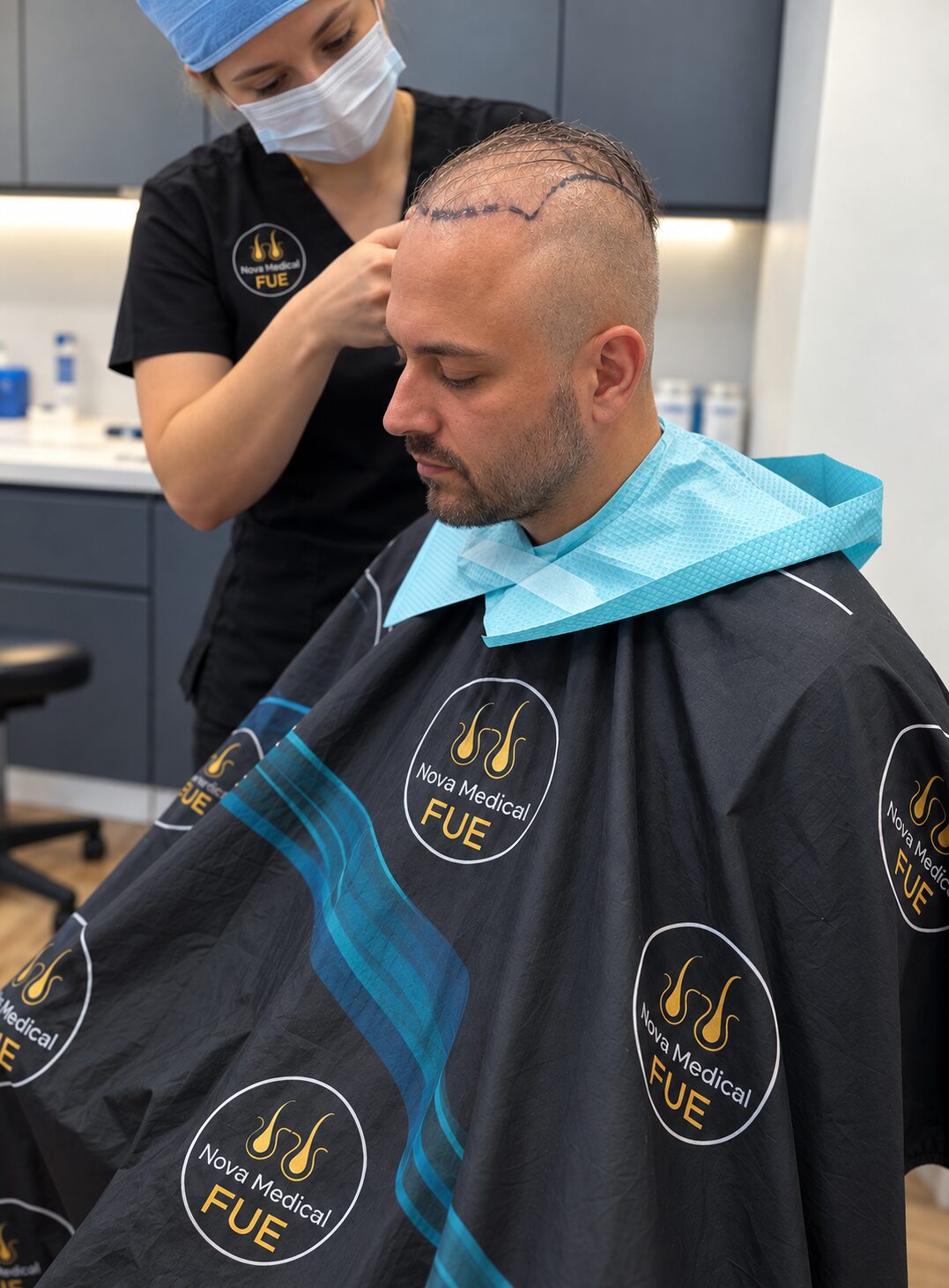
Oakville is well served for general medical and cosmetic care, but surgical hair restoration is a narrow specialty with specific requirements. A single FUE session commonly runs six to eight hours, needs a surgeon to design the hairline and plan graft distribution, and needs a trained team to handle thousands of individual follicular units without damaging them. Clinics structured around that kind of day are concentrated in the core.
Because the journey is short, the usual out-of-town trade-off does not really apply to you. You are not weighing convenience against quality, and you are not in the position of patients who consider overseas packages largely to avoid a long domestic trip. If you have been looking at those options, our comparison of hair transplants in Toronto versus Turkey sets out what actually differs, and most of it concerns the twelve months after surgery rather than the day itself.
Proximity also makes staged planning realistic. Hair loss is progressive, and a plan that protects your donor supply may involve a second procedure years later. That is an easy commitment when the clinic is a thirty minute train ride away.
The clinic is at 100 Front Street West. The Lakeshore West GO line is the obvious route, and unusually for a trip into downtown, the train is faster than driving at almost every hour of the day.
| Route | From | Typical journey |
| GO train, Lakeshore West | Oakville GO | Direct to Union Station, commonly around 30 to 35 minutes, with frequent service through the day and not only at peak |
| GO train, Lakeshore West | Bronte GO or Clarkson GO | Similar journey; Clarkson is often the easier option from east Oakville and the Mississauga border |
| Driving, QEW east | Oakville | Around 35 to 40 km, commonly 35 to 50 minutes outside peak and considerably longer during weekday rush, plus downtown parking |
| On arrival at Union | Union Station | The clinic is directly across Front Street, a walk of a few minutes |
You cannot drive yourself home after a hair transplant. The procedure is carried out under local anaesthetic with oral sedation, which rules out driving for the remainder of the day. From Oakville that is a non-issue: the Lakeshore West line runs frequently in both directions, and because the clinic sits directly opposite Union Station you simply walk across Front Street and travel home. No driver, no hotel, no parking.
This is the single biggest practical advantage of the location for Halton patients, and it is why overnight stays are rarely necessary from Oakville even for a long session.
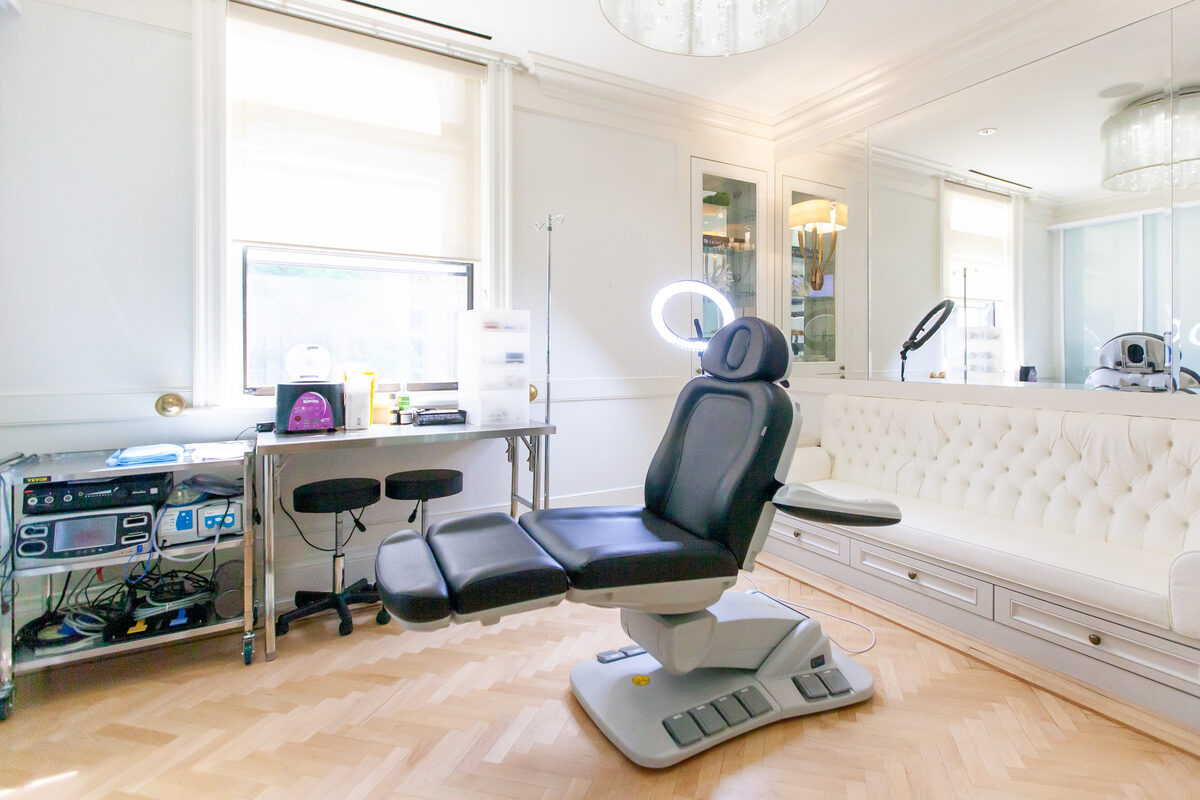
Because the trip is short, most Oakville patients attend in person at every stage rather than relying on remote consultation. That is generally the better option where it is practical.
An in-person consultation to measure donor density, map your pattern of loss and agree a graft count and written plan. Prefer to do it remotely? Say so when booking and we will arrange that instead.
A single full day with us, typically six to eight hours according to how many grafts are planned. You travel home that evening holding written aftercare instructions and everything you have been prescribed.
Checks at the milestones that actually tell us something during year one. Given how frequently the Lakeshore West line runs, attending these in person costs you little and tells us far more.
If a remote consultation would suit you better, the practical detail is on our out-of-town patients page, which covers remote assessment and aftercare at a distance for anyone who prefers it.
Timing is worth planning properly. Most patients want somewhere between a few days and two weeks before they are comfortable being seen as normal, which varies by job type. Our guide to the best time to schedule a hair transplant covers choosing a date, and the week-by-week recovery guide sets out each stage.
Which technique is appropriate depends on your donor supply, the pattern and extent of your loss, your hair characteristics and how you wear it. It is a clinical decision made at assessment.
FUE, or follicular unit extraction, accounts for the majority of the work we do and is what most enquiries are about. Individual follicular units are taken from the donor area at the back and sides and placed into the thinning area, leaving small dot scars rather than a line and allowing shorter hairstyles afterwards. The FUE page covers candidacy, the procedure and recovery in detail.
FUT is still appropriate for some patients, particularly where a high graft count is needed in one session. DHI uses an implanter pen for placement. Female hair restoration follows a separate assessment pathway, since female pattern loss is often diffuse and candidacy is narrower. PRP is a non-surgical option, and the short trip from Oakville makes its repeat session schedule far more manageable than it is for patients further out.
To understand the likely scale before booking, see our guide to how many grafts you need. Nova Medical does not overharvest grafts, and where protecting your long-term donor supply means a more conservative count or staging the work, that is what we will recommend.
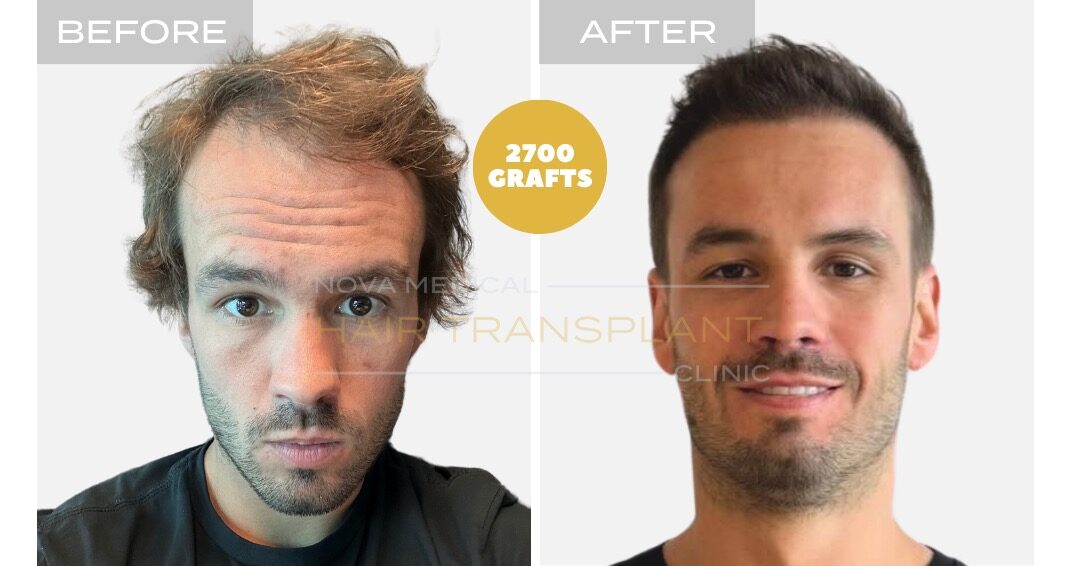
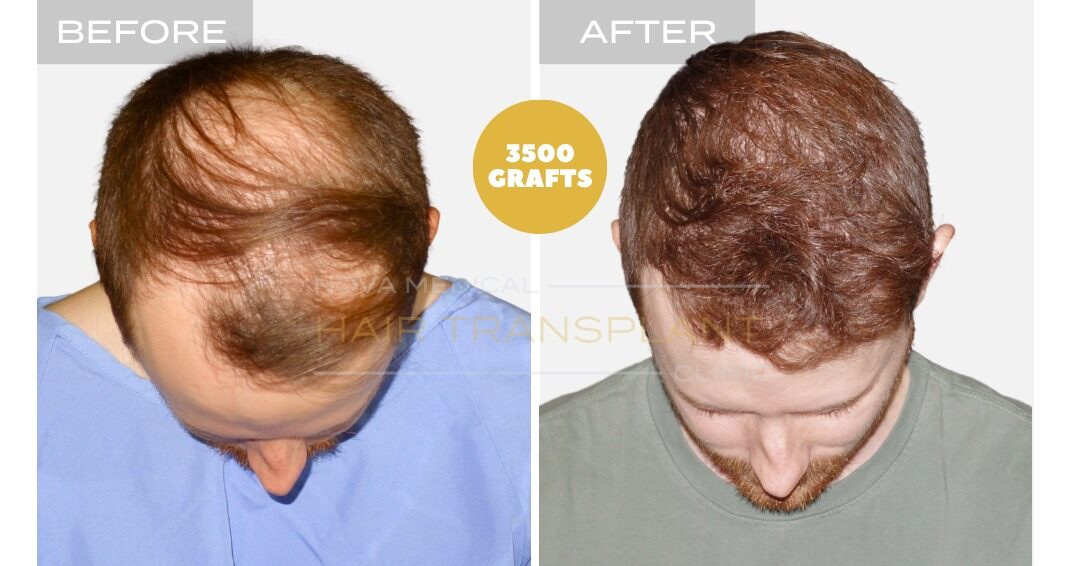
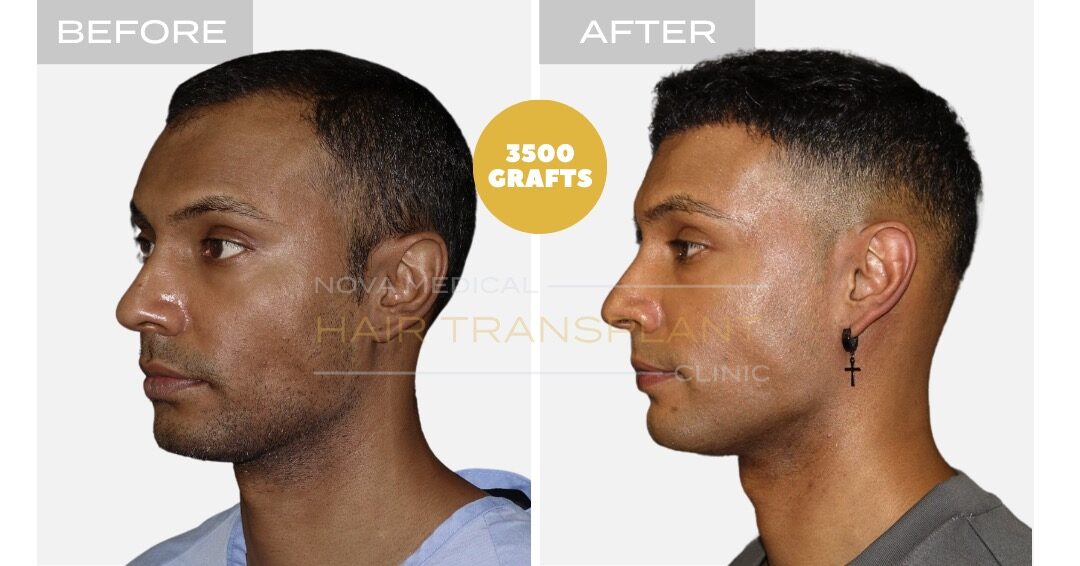
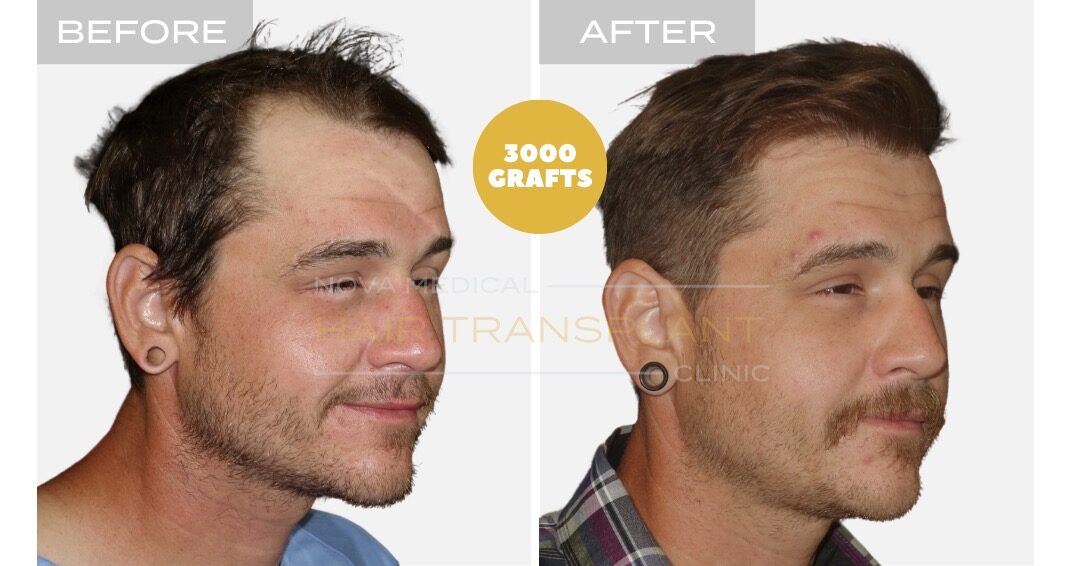
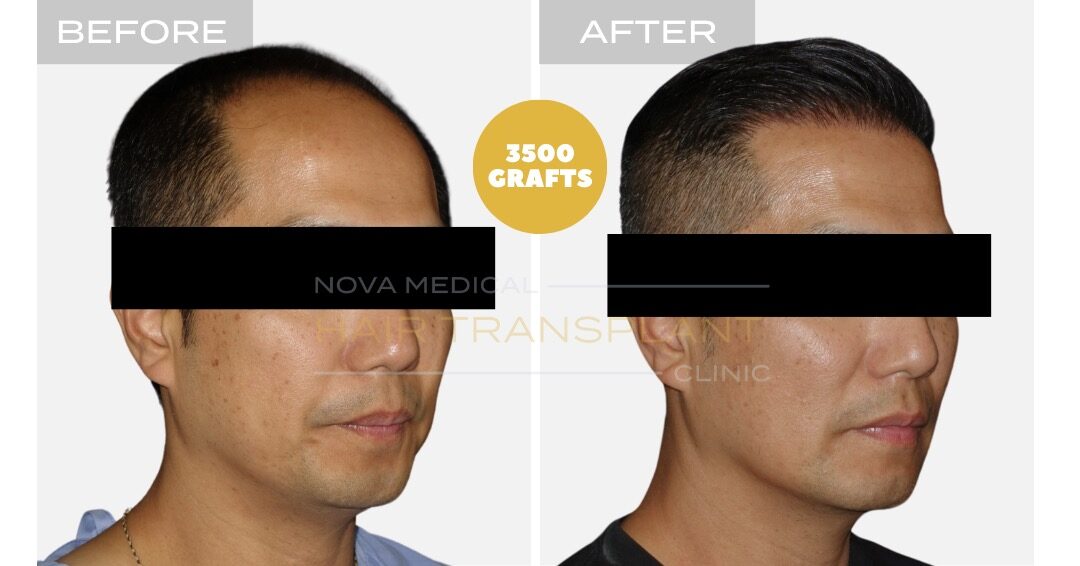
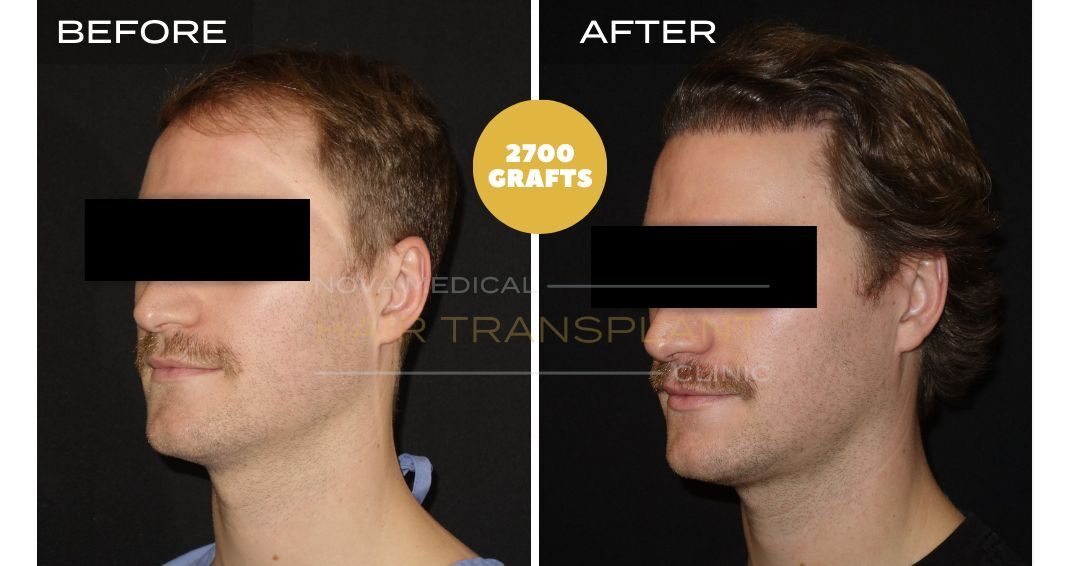
What you pay is determined by graft count, technique and the length of the surgical day. It does not vary by where you travel from. Our hair transplant cost page explains what drives the figure and what is included.
Hair restoration for pattern hair loss is considered cosmetic in Ontario, so it is not covered by OHIP, and private benefit plans generally exclude it. Check your own plan rather than assuming. Hair loss following trauma, burns or previous surgery is assessed differently, so mention those circumstances at consultation.
From Oakville the travel component is close to negligible: a return GO fare and a day away from work. That is worth noting if you have been pricing overseas packages, where a large share of the headline figure is flights and accommodation rather than surgery.
A private assessment with Dr. Martin Jugenburg (FRCSC) covers your donor supply, a realistic graft count and a written plan, with no obligation. From Oakville GO it is roughly a thirty minute ride to a station directly across the road.