
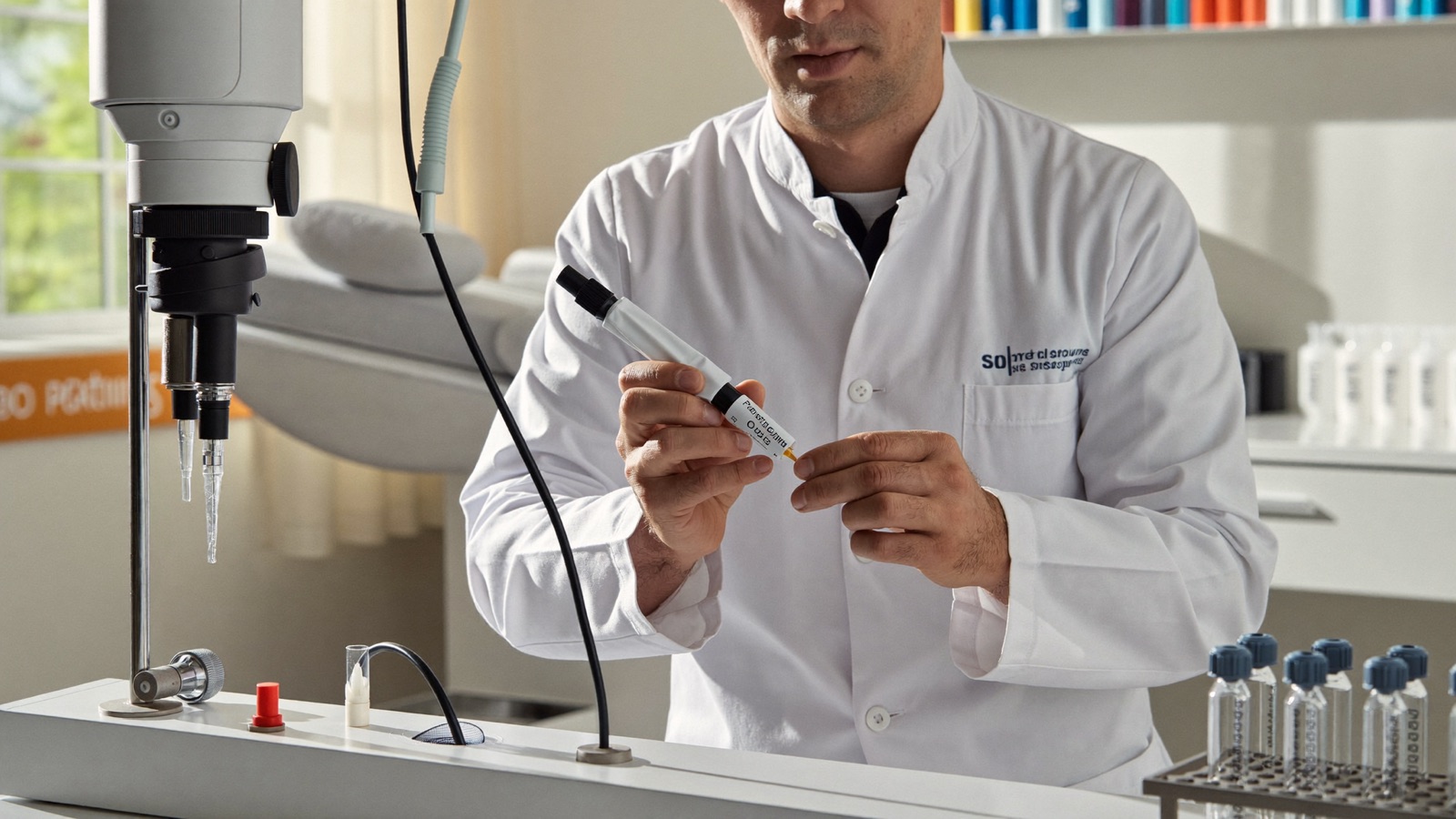
If you are researching non-surgical options for thinning hair, you will quickly run into three terms: PRP, PRF and hair transplant surgery. Comparing PRP vs PRF vs hair transplant can feel confusing, because clinics often describe all three as hair restoration. In the PRP vs PRF hair debate, the two injection treatments are close cousins, while surgery is a different tool for a different problem. This guide explains how each one works, who each tends to suit, what the evidence honestly shows, and how they can work together.
The Short Answer on Which Treatment You Need
The short answer: PRP and PRF are injection treatments that may help existing, still-active follicles in early or moderate thinning. Neither can grow hair where follicles have already been lost. A hair transplant moves healthy follicles into thinning or bald areas, so it suits established pattern loss. Many patients benefit from a plan that combines both.
The right choice depends on how far your hair loss has progressed, what is causing it and how much donor hair you have. That is why an assessment comes before any recommendation.
If PRP is the option you are most curious about, our page on PRP hair loss treatment in Toronto walks through how sessions run at our clinic, who tends to be a good candidate and how a course of treatment is planned.
What PRP Is and How It Is Prepared
PRP stands for platelet-rich plasma. Platelets are the cells in your blood that help with healing, and they carry proteins known as growth factors. The idea behind PRP for hair is that delivering a concentrated dose of these growth factors to the scalp may encourage weakened follicles to stay in their growth phase for longer and produce thicker hair.
Preparation is simple and takes place during the same visit:
- A small sample of blood is drawn from your arm, much like a routine lab test.
- The sample is mixed with an anticoagulant so it does not clot, then placed in a centrifuge.
- The centrifuge spins the blood at speed, separating it into layers and concentrating the platelets in the plasma.
- The platelet-rich layer is drawn off and injected into the thinning areas of the scalp with a fine needle.
Because PRP comes from your own blood, the risk of an allergic reaction is very low. A session usually takes 30 to 60 minutes, and most people return to normal activities the same day, with mild tenderness for a day or two.
The evidence for PRP in pattern hair loss is encouraging but mixed. A number of studies report improvements in hair density and thickness, particularly in early androgenetic alopecia. Other studies show smaller effects, and protocols vary widely between clinics, which makes results hard to predict for any one person. It is fair to see PRP as a reasonable option for the right candidate, not a certain fix.
What PRF Is and How It Differs From PRP
PRF stands for platelet-rich fibrin. It also starts with a sample of your own blood, but it is prepared differently. In most PRF methods, no anticoagulant is added and the blood is spun at a lower speed for a shorter time. This keeps more white blood cells in the mixture and leaves fibrinogen in place, which begins to form a soft fibrin mesh once the sample is injected.
Supporters of PRF suggest this mesh releases growth factors more gradually than PRP, which could in theory mean a longer-lasting signal to the follicles.
PRP has a larger body of research in hair loss. There are few well-designed studies comparing PRF directly with PRP, and most involve small groups followed for a limited time. PRF may turn out to have advantages, but the current evidence does not show that it is reliably more effective. If a clinic presents PRF as a clear upgrade on PRP, it is reasonable to ask what that claim is based on.
What a Hair Transplant Does That Neither Can
PRP and PRF work on follicles that are still alive. They cannot create a new follicle where one has been lost, so long-bald areas leave little for an injection treatment to support.
A hair transplant works in a completely different way. Healthy follicles are moved from the donor area at the back and sides of the scalp, where hair is genetically resistant to pattern loss, into the thinning or bald areas. They keep that resistance in their new location, so a transplant can restore areas that PRP and PRF cannot reach.
In a follicular unit excision procedure, individual groups of one to four hairs are removed one by one and placed into tiny recipient sites. Our page on FUE hair transplant in Toronto explains each stage, from hairline design to recovery. The trade-off is that surgery is a bigger commitment. It involves local anaesthetic, a recovery period and a wait of around 12 months to see the full result. The donor area is also finite, so the number of grafts available has to be planned carefully over a lifetime.
| Factor | PRP | PRF | Hair transplant |
| What it does | Delivers concentrated growth factors to existing follicles | Delivers growth factors in a fibrin matrix that may release them more slowly | Moves healthy follicles into thinning or bald areas |
| Suited to | Early to moderate thinning with active follicles | Early to moderate thinning with active follicles | Established pattern loss with a suitable donor area |
| Can it restore bald areas? | No | No | Yes, within donor limits |
| Procedure | Blood draw, centrifuge, scalp injections | Blood draw, slower spin, scalp injections | Surgical procedure under local anaesthetic |
| Downtime | Usually none beyond mild tenderness | Usually none beyond mild tenderness | Several days of visible healing, months of regrowth |
| Sessions | A course of sessions, then maintenance | A course of sessions, then maintenance | Often one procedure, sometimes a second later |
| Strength of evidence | Moderate and mixed | Limited and early | Well established for suitable candidates |
Who PRP and PRF Suit: Early Thinning and Maintenance
Injection treatments make the most sense when there are still plenty of living follicles to work with.
PRP or PRF may be worth considering if you have:
- Early to moderate pattern thinning, where hair is finer but the scalp is not yet bare.
- Diffuse thinning across the crown and mid-scalp, which is common in women.
- Recent increased shedding, once other causes have been checked.
- A preference for a non-surgical approach, or a desire to delay surgery.
- Good general health and no blood or platelet disorders.
Realistic expectations matter. The usual goal is to slow thinning and improve the thickness of existing hair, not to change your hairline, and any results appear gradually over several months.
Platelet treatments are rarely the only tool worth discussing. Medical therapy with finasteride or minoxidil has a much larger evidence base for slowing pattern hair loss, and the two approaches are often used together. Our guide to finasteride and minoxidil with a hair transplant explains how these medications work, their side effects and how they fit into a longer-term plan.
PRP and PRF are not suitable for everyone, including some people with blood disorders, scalp infections or those on blood thinners. Hair loss from scarring conditions, thyroid problems or nutritional deficiencies needs a different approach, so the cause should be identified first.
Who Needs Surgery: Established Pattern Loss
When pattern loss has progressed to the point where areas are bald or very sparse, injection treatments alone are unlikely to give the result most people are hoping for. In these cases, PRP and PRF should not be seen as a substitute for surgery. They may help nearby hair, but they cannot replace follicles that have gone.
A hair transplant is usually worth discussing if you have:
- A receding hairline or temple recession that has been stable for some time.
- A thinning or bald crown that has not responded to medical therapy.
- Established pattern loss in men, often around Norwood 3 or beyond.
- A healthy, dense donor area at the back and sides of the scalp.
- Realistic goals that fit the number of grafts your donor area can safely supply.
Suitability for surgery depends on much more than the degree of loss. Age, family history, how quickly the loss is progressing, hair characteristics and overall health all matter. Our guide on whether you are a good candidate for a hair transplant covers these factors in detail and explains why some people are advised to wait or to start with medical treatment first.
A private assessment at our hair transplant clinic in Toronto looks at your pattern of loss, your donor supply and your goals together. That makes it possible to say honestly whether PRP, surgery or a combination makes more sense.
Using PRP Alongside a Transplant
PRP vs PRF vs hair transplant is often presented as a choice, but many people use PRP and surgery together because they do different jobs.
A transplant restores hair in areas that have already been lost. It does not stop pattern loss from continuing in the native hair around the transplanted area. PRP is one of the tools some patients use to help support that surrounding hair, alongside medical therapy where appropriate.
There are several ways PRP is commonly combined with surgery:
- Before surgery: to support existing hair while a procedure is planned.
- Around surgery: some clinicians use it to support healing, although evidence for an effect on graft survival is limited.
- After recovery: as part of long-term maintenance for native hair.
It is important to be honest about what PRP adds. It may help some people keep more of their native hair, but it does not replace the need for a well-planned transplant or careful graft handling. The quality of the surgical result still depends mainly on planning, technique and the experience of the team. At Nova Medical, every procedure is overseen by Dr. Martin Jugenburg, a Royal College-certified plastic surgeon (FRCSC), and any additional treatments are discussed as part of the overall plan rather than added automatically.
Session Frequency and What Maintenance Looks Like
PRP is usually given as a course, followed by maintenance if it is helping. Schedules vary, but a typical approach looks like this:
- Initial course: often three or four sessions spaced around four to six weeks apart.
- Review: progress is usually assessed after several months, ideally with standardised photos taken in the same lighting.
- Maintenance: if there is a response, maintenance sessions are often spaced every four to twelve months.
PRF schedules tend to be similar, although protocols are less standardised because there is less research to guide them. In both cases, results are not permanent. If treatment stops, the underlying pattern loss usually continues, and any gains may gradually fade.
That ongoing commitment is worth weighing when you compare options. Because PRP and PRF are courses rather than one-off treatments, the total time and expense depend on how many sessions you need over the years. Our page on hair transplant cost in Toronto explains how pricing and financing work, and your assessment will include a written estimate for the plan that fits you.
Transplanted follicles, by contrast, are expected to keep growing long term, although most transplant patients still need maintenance for their native hair.
The bottom line: PRP and PRF may help thinning hair while follicles are still active, but the evidence is mixed and neither can restore bald areas. A hair transplant replaces hair that has been lost. For many people, the most realistic plan combines surgery where it is needed with ongoing care for the hair they still have.
Not Sure Which Route Fits?
A private assessment with Dr. Martin Jugenburg (FRCSC) looks at your pattern of loss and your donor area, and explains honestly whether PRP, a transplant or both make sense for you. No cost and no obligation.